Care Notes
Care notes.
Watering, light, mounting, remounting, raising sporelings. Written down after years of growing them ourselves.
Care ·
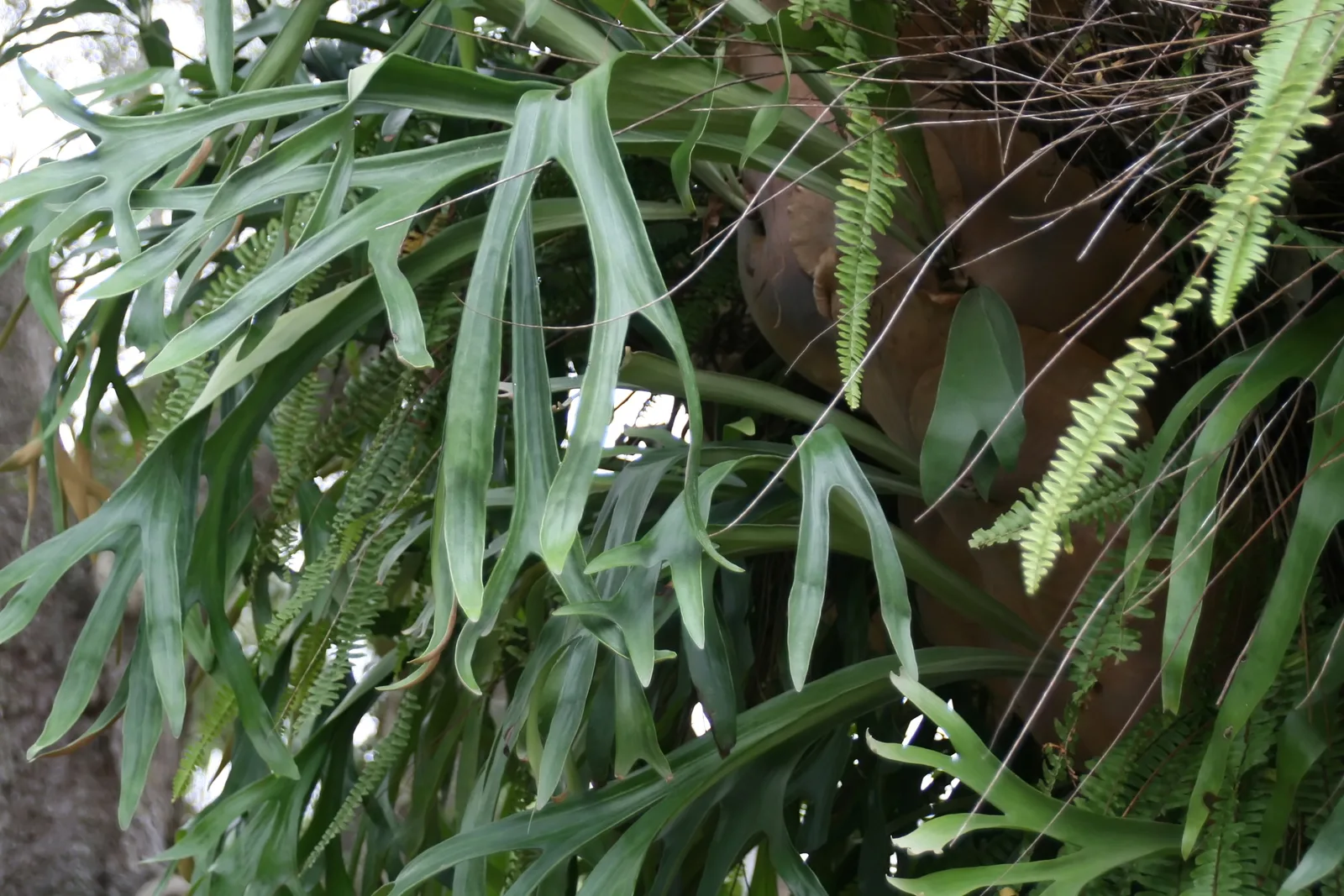
Five Beginner Staghorn Fern Mistakes: Water, Light, Airflow, Pests, Fertiliser
Almost every problem in a beginner's staghorn fern collection comes down to five things: water, light, airflow, pests and fertiliser. Here is the opposite watering logic for mature plants and sporelings, grow light wattage and angle, humidity in an air-conditioned room, dealing with mealybugs and fungus gnats, and a potassium-forward, nitrogen-light feeding rule, with one order to check when growth stalls.
Care ·
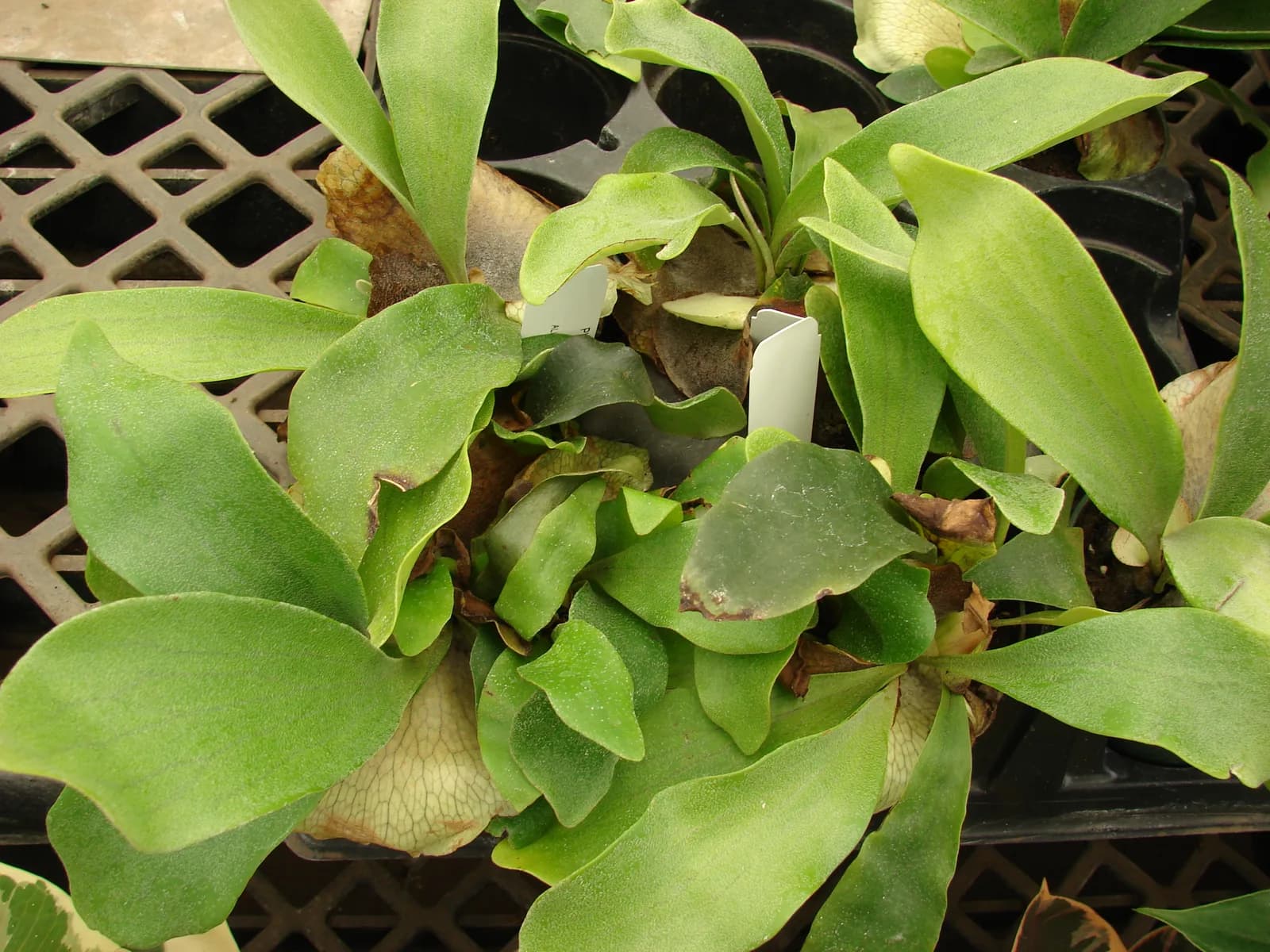
Staghorn Fern Sporeling Care: Pot Stage, Growth Milestones, and When to Mount
The first thing that fails on a staghorn fern sporeling is rarely light, it is temperature and water. From windowsill care for the smallest sporelings and the wrung-towel standard for sphagnum moisture, through cycling once the first fertile fronds appear, to humidity domes, grow lights, and knowing when a pup or a sporeling is actually ready to mount.
Care ·
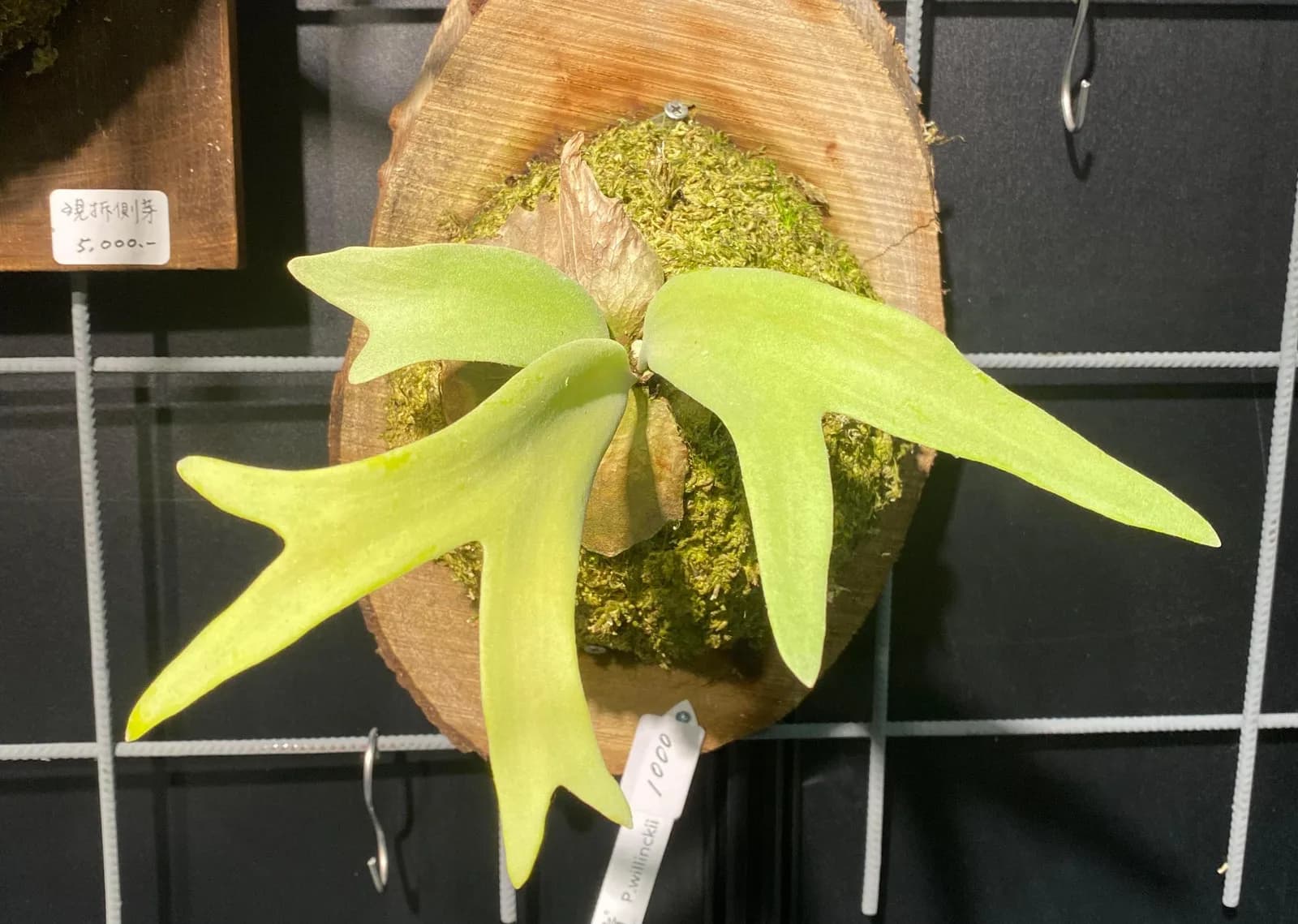
How Often to Replace Sphagnum Moss and When to Remount a Staghorn Fern: Read the Medium and the Shield Frond
Sphagnum on a staghorn fern is replaced by condition, not by calendar: a sour smell, a slimy or muddy texture, water that will not soak in or never dries, a white salt crust. Most of the time, though, there is no need to tear the plant down. The shield fronds wrap the board and become the new medium, and adding moss or attaching the old board to a larger one is enough. True remounting is for a rotting board, rotting roots, or a bigger mount that cannot be attached; the best season is late spring to early summer while shield fronds are growing. Aftercare for the first two weeks links back to the mounting guide.
Care ·
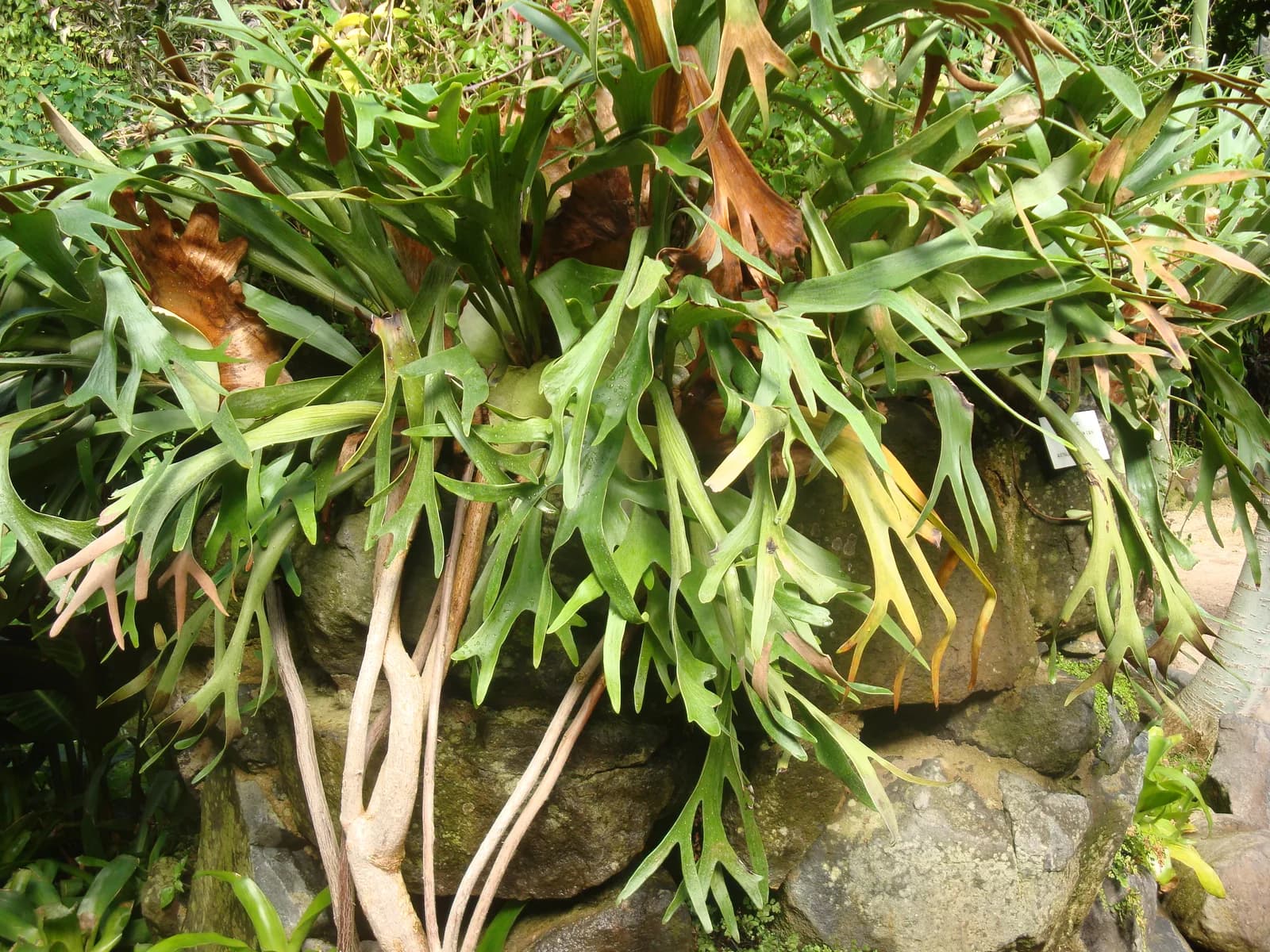
Do Staghorn Ferns Need Fertilizer: Light Feeding in the Growing Season, When to Stop, and Whether the Banana Peel Trick Works
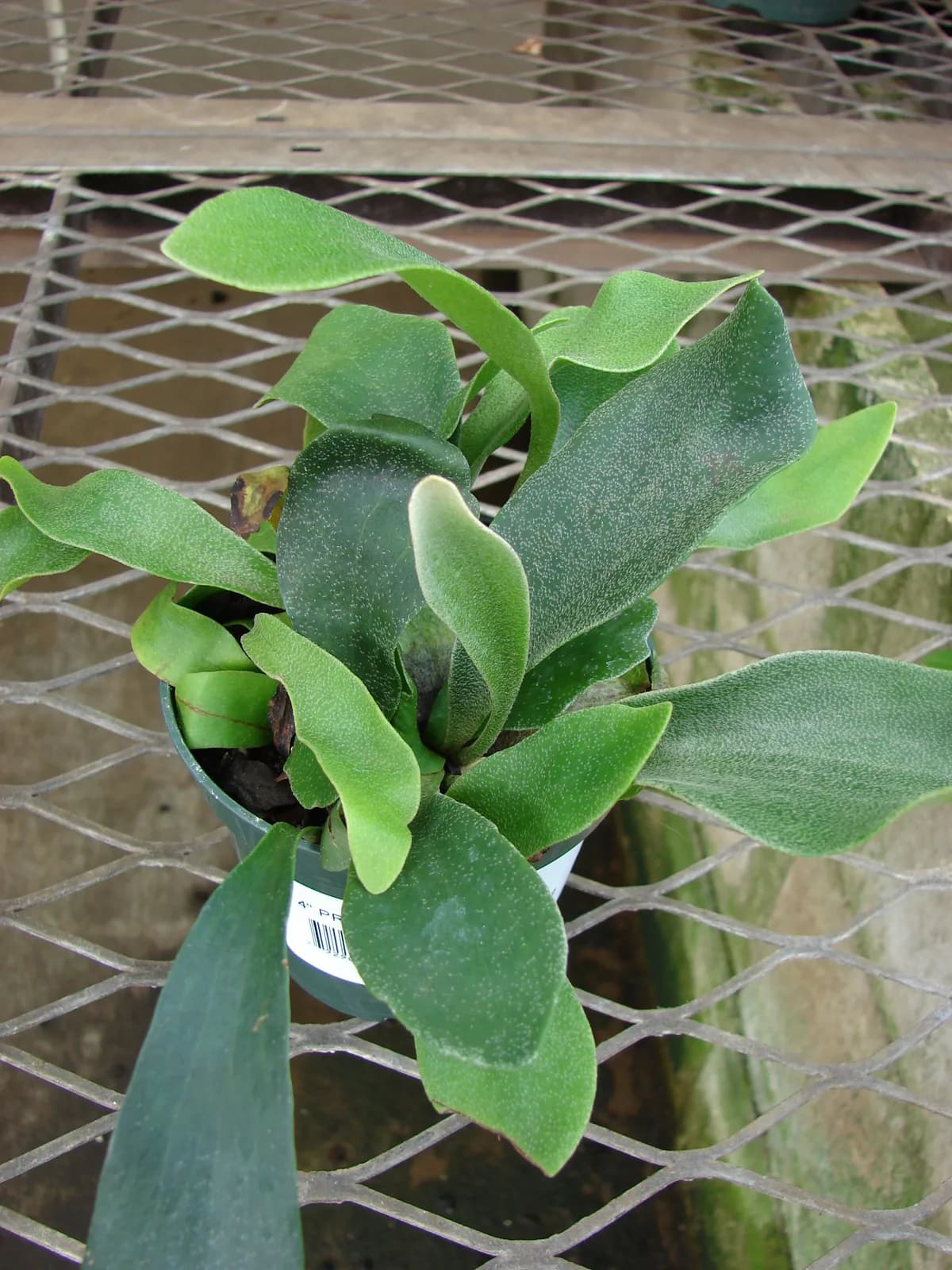
A staghorn fern does need fertilizer, but very little. As an epiphyte it is used to a trickle of nutrients, not an occasional flood. When to feed: lightly through the spring-to-autumn growing season. When to stop: winter, dormancy, and after mounting or dividing a pup. Slow-release or liquid, how far to dilute, where to place it. And an honest answer on banana peels: the idea has a basis, since shield fronds collect leaf litter anyway, but a raw peel behind the shield moulds and attracts pests, and most sources consider its potassium content overstated.
Care ·
Which Staghorn Fern Should a Beginner Buy First: Choose by Your Environment, Not by Price
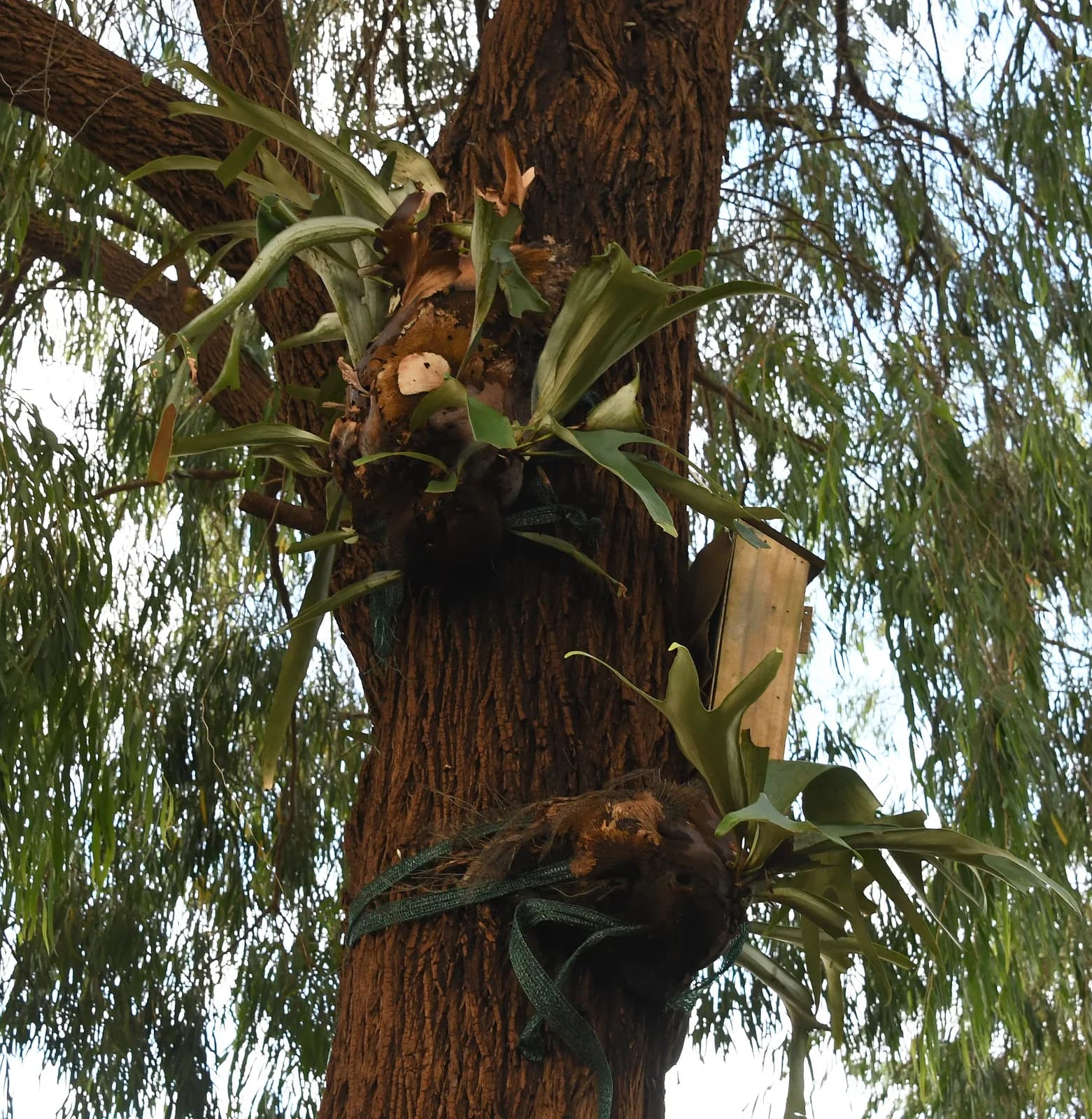
No staghorn fern is easy everywhere. Ask three questions first: is there a balcony or a bright window, does air move in summer, will you look at it every day. Balcony with light and airflow points to bifurcatum, hillii and veitchii; an indoor window with a fan to coronarium and willinckii; the collector route runs through a plain willinckii before any named line. Why ridleyi, madagascariense, andinum and quadridichotomum are the wrong plants to learn on, and whether to start with a sporeling, a pup or a mounted plant.
Care ·
Do Staghorn Ferns Need Sun? Full Sun, Half Sun and Indoors, with a Light Guide to All 18 Species
Yes, more light than most people think, but Taiwan's midday summer sun is too strong for most species. Light is what builds the silver finish and the frond shape; summer and winter need different shade; windows and grow lights indoors. Then one table: all 18 species graded sun-tolerant, medium or shade-leaning to match the LDS species pages, with disagreements flagged.
Care ·
Staghorn Fern Fronds Turning Black, Yellow or Brown: Water Damage, Sunburn, Crown Rot, or Normal Ageing
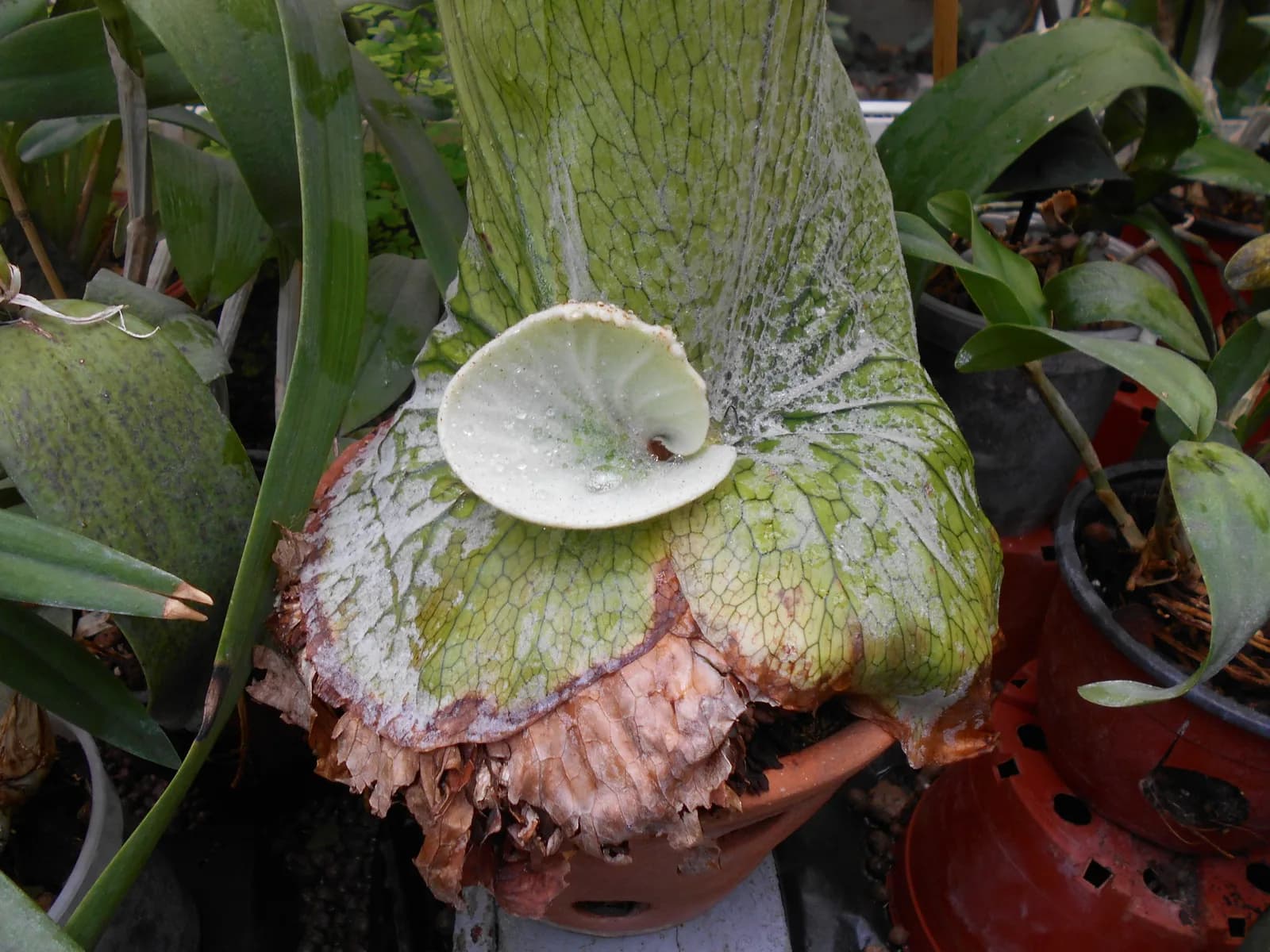
A browning shield frond is normal. The oldest fertile frond yellowing is normal. Do not reach for the scissors. The only thing that needs action today is a black, soft growing point. Three questions, which frond, what colour, what texture, sort black, yellow, brown tips, brown spots and curling into causes and fixes, with notes on ridleyi, madagascariense and bifurcatum.
Care ·
How Often to Water a Staghorn Fern: Soaking, Misting, Reading the Shield Frond, and Adjusting by Season and Species
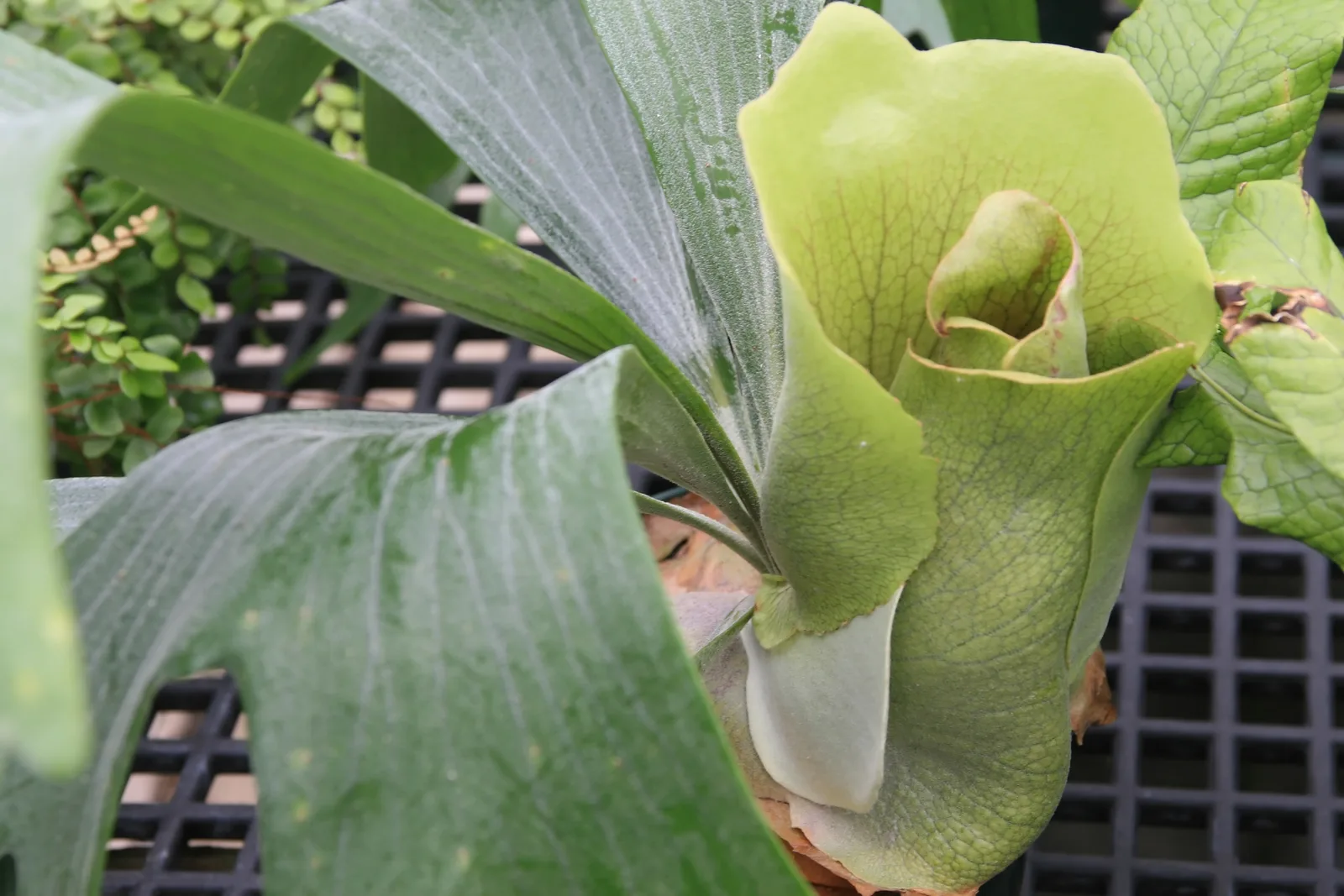
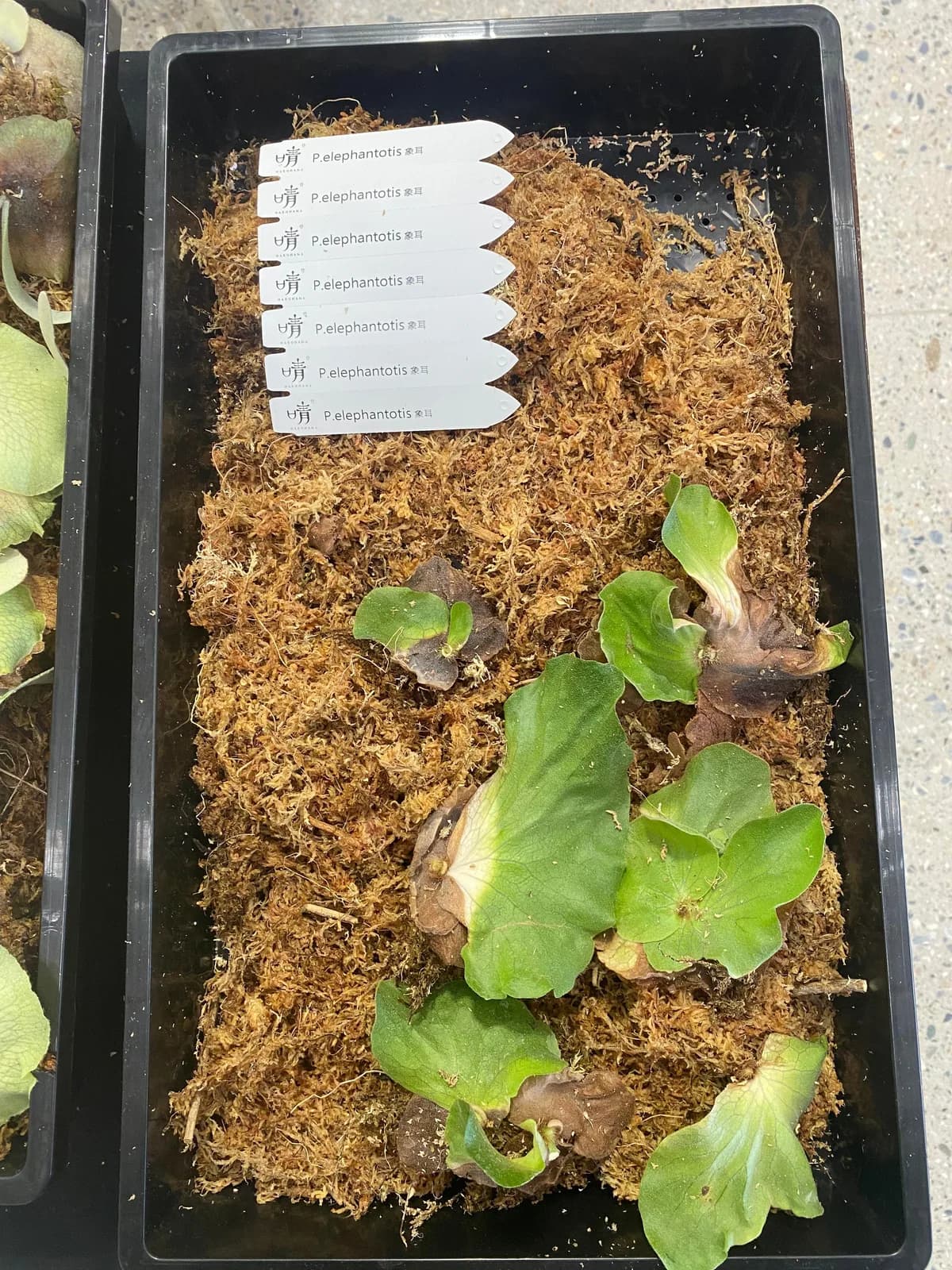
The first question every new grower asks is how many days between waterings. There is no such number. Three ways to read a mounted staghorn fern: lift the board, read the sphagnum, read the shield and fertile fronds. Why soaking, pouring and misting are not the same thing, and how to adjust through the seasons and across species from ridleyi to bifurcatum to wallichii.
Care ·
When and How to Divide Staghorn Fern Pups: Timing, Tools and the First Two Weeks
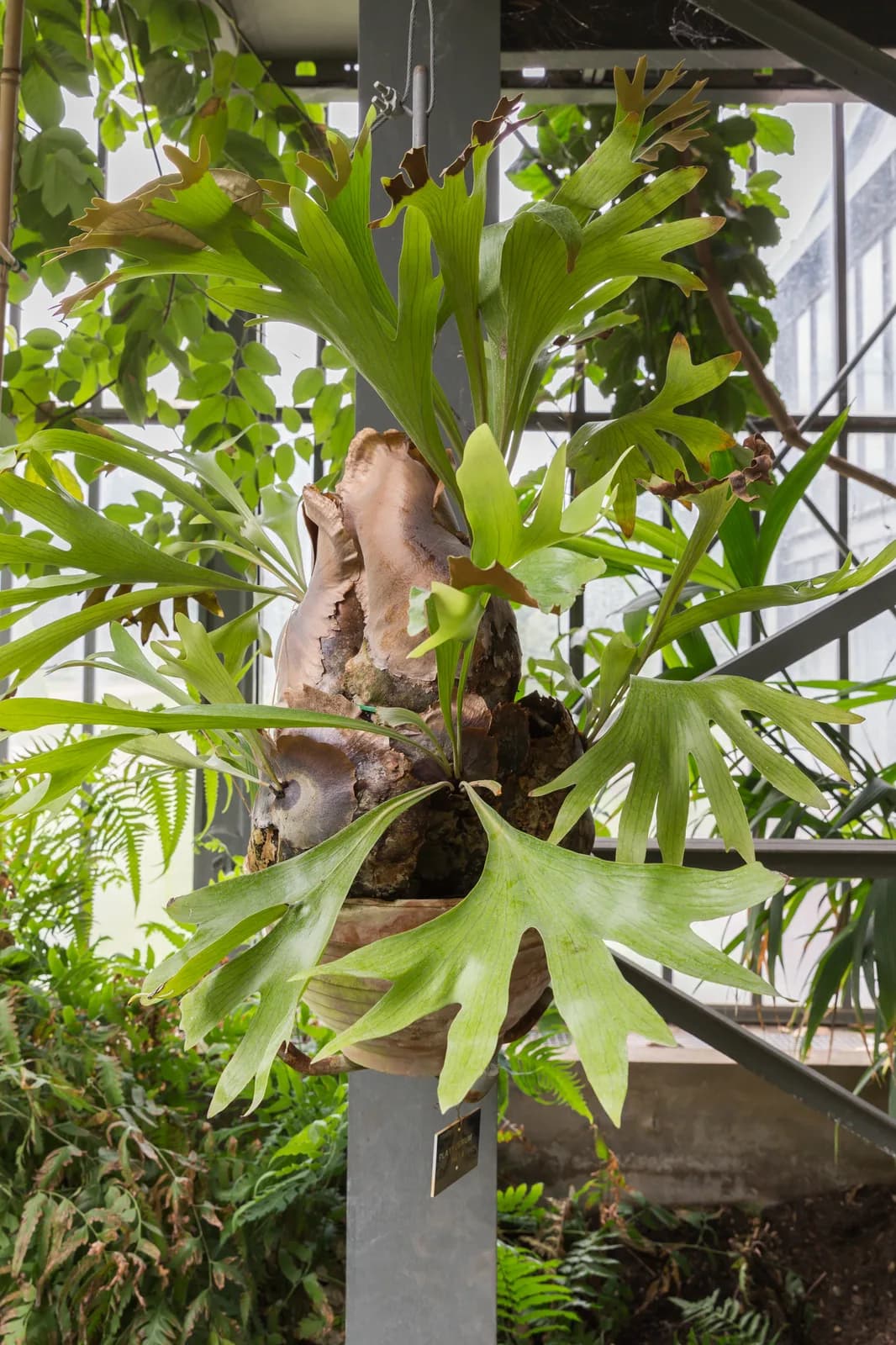
A pup is ready when it has its own shield frond, two or three fronds and roots of its own; the season is read from night temperatures, not the calendar. How to make a clean cut, why the pup gets no soaking for the first three days, what light and air to give in the first two weeks, which species never pup, and how a division differs from a sporeling in mother-plant expression.
Care ·
Getting Staghorn Ferns Through a Hot, Humid Summer: Shade, Fans, Watering Time and Which Species to Pull First
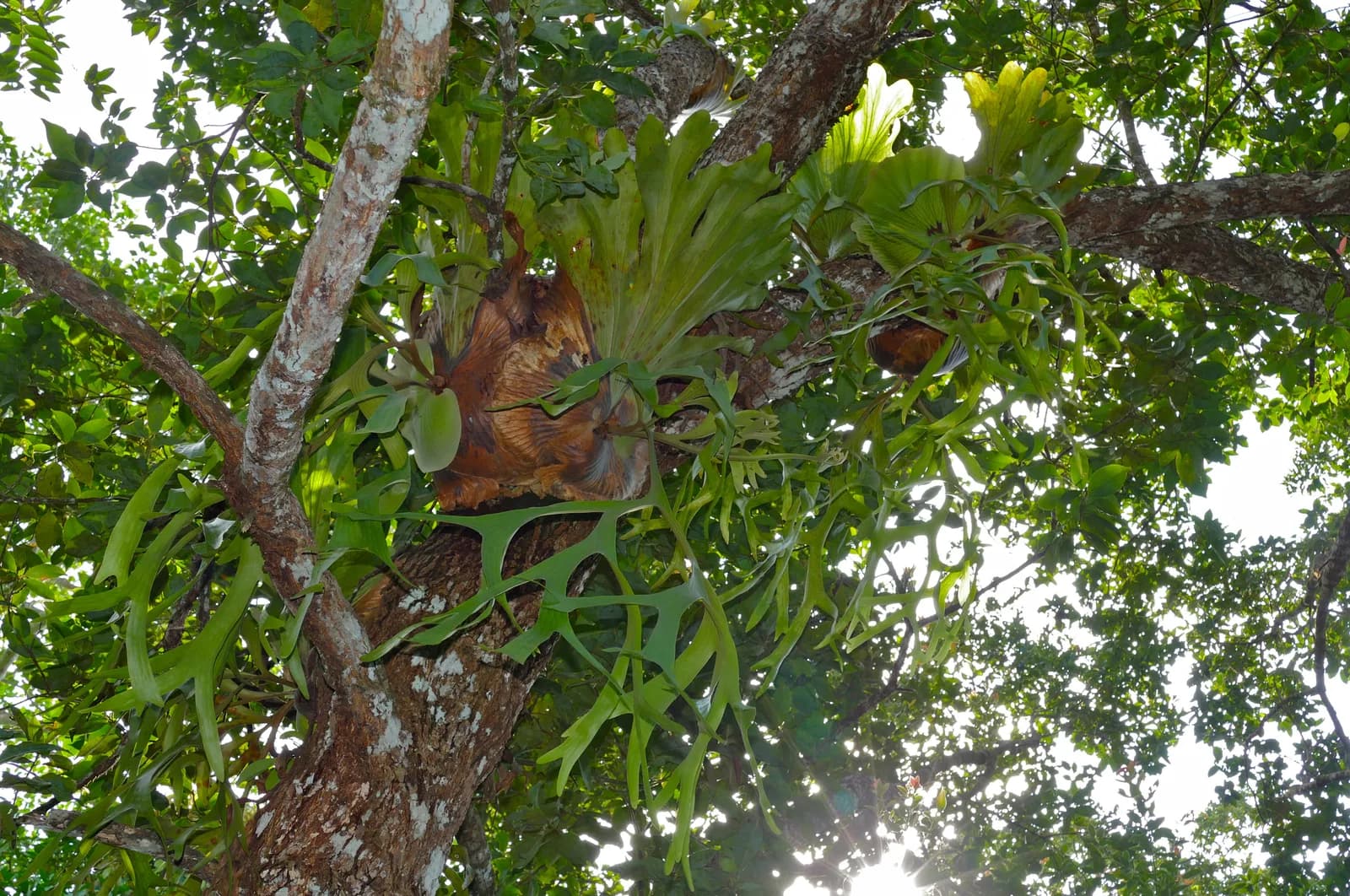
From July to September Taiwan sits around 35 °C by day, nights refuse to cool, and an afternoon storm turns the balcony into a steam room. Most Platycerium do not fear heat; they fear heat with no airflow. Shade in rough percentages, where to point the fan, why not to water in the afternoon, and which species stay put and which move indoors first.
Care ·
How to Keep Platycerium ridleyi and P. madagascariense from Rotting: Airflow, Watering Rhythm and Medium, Taiwan Edition
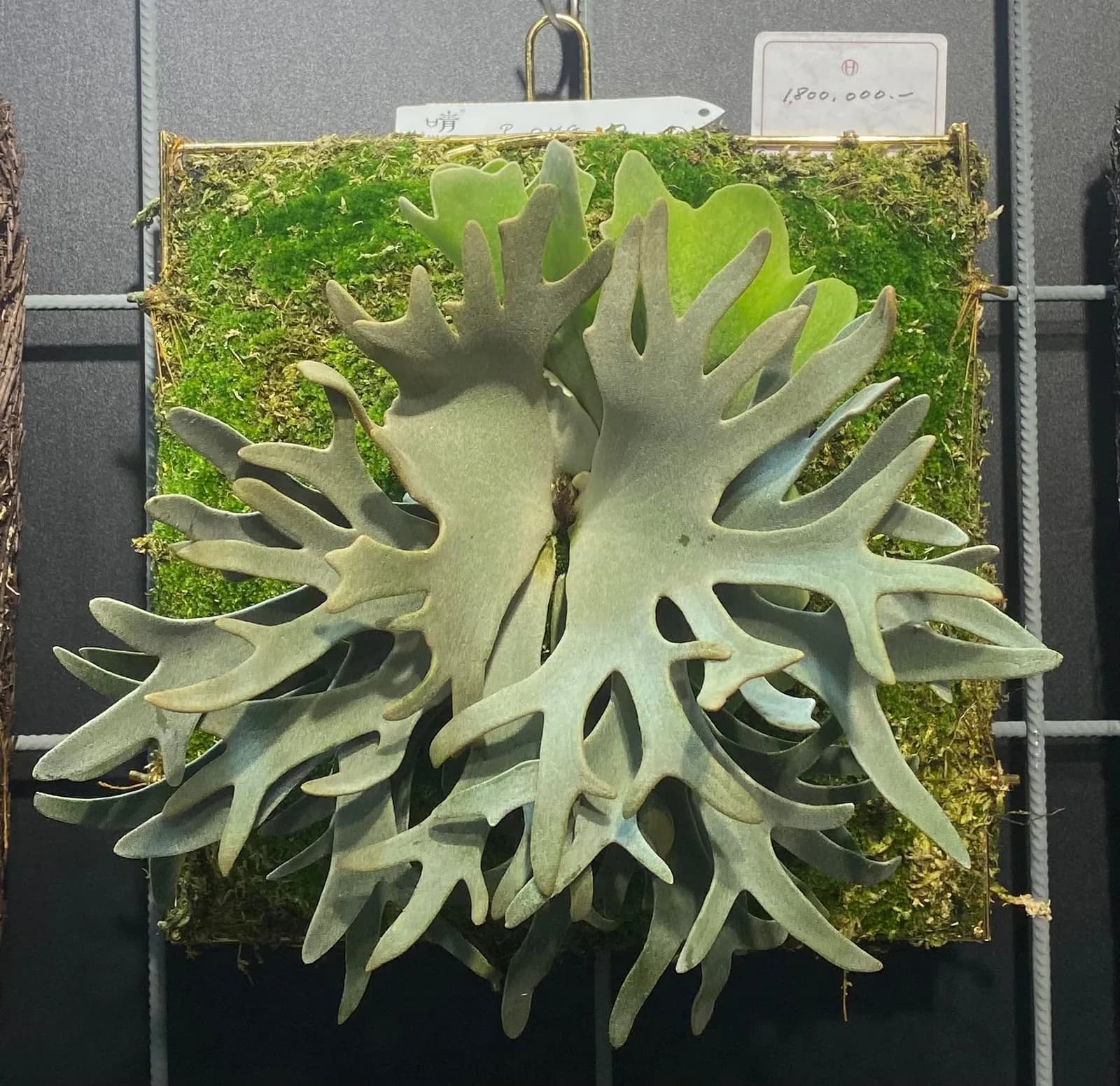
Platycerium ridleyi and P. madagascariense are the two species Taiwanese collectors lose most often, and almost always to crown rot. Too much water is not the explanation. Take apart the four real causes, then walk through plum rain, high summer and the air-conditioned room, and the care for each species becomes clear.
Care ·
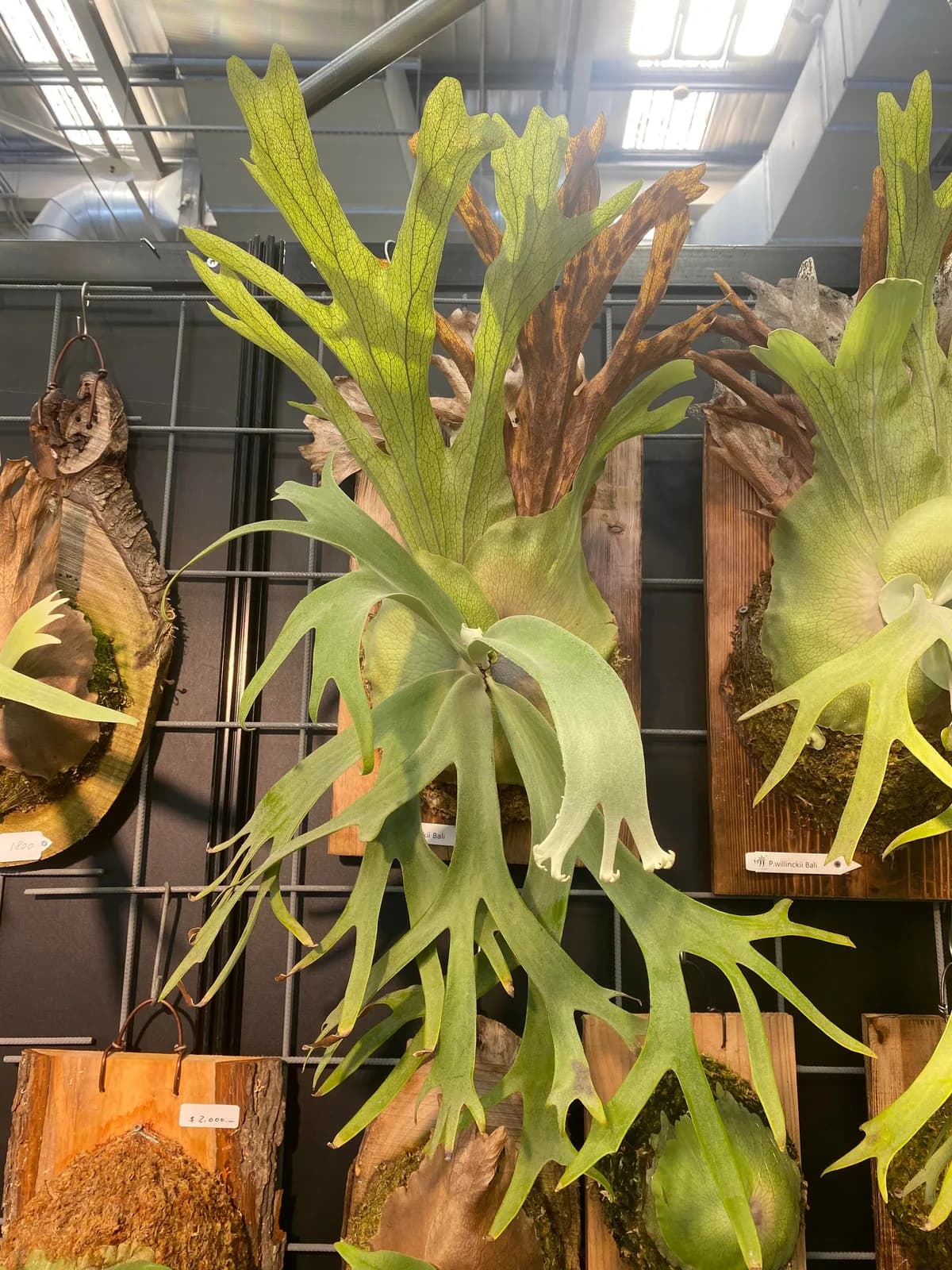
How to Read a Staghorn Fern Listing: Mounted Specimen, Collector Specimen, Sporeling, Pup and Semi-Mature Explained
A single listing title can carry six terms: pup, sporeling, tissue culture, semi-mature, mounted, mother-plant expression. Each describes where the plant came from, how far it has grown, what form it is in now, and whether the lineage can be trusted. Read them, and you know what to ask.
Care ·
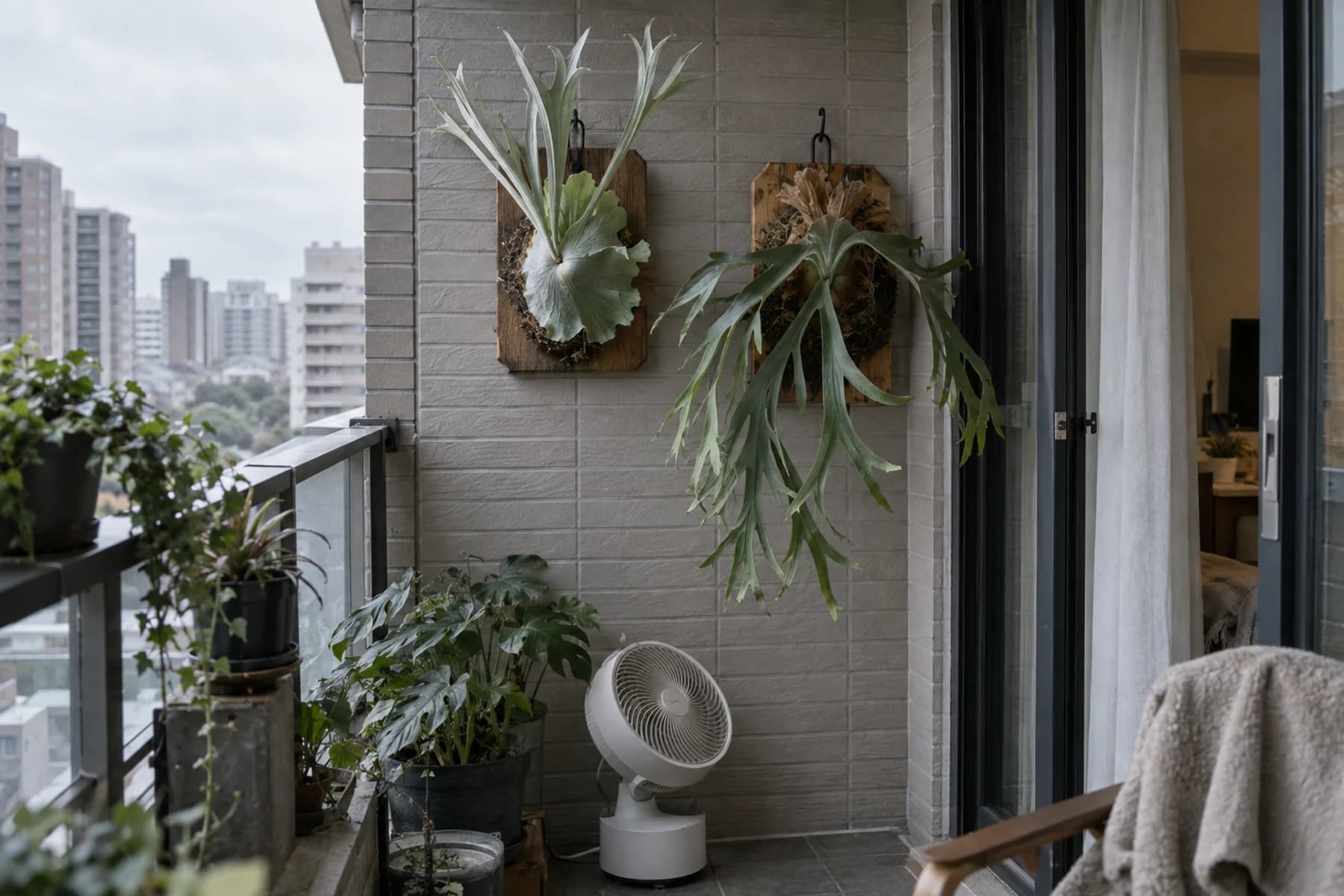
Why Staghorn Ferns Hold Value: How Cultivar, Mother-Plant Expression and Propagation Set the Price
Two plants share a Latin name; one costs a coffee, the other a car. The gap is not about expensive or cheap. It is four variables stacked together: species or cultivar, pup or sporeling or tissue culture, mother-plant expression, and years already grown.
Care ·
Overwintering Platycerium: Cold Tolerance by Species, When to Bring It In, and Why Damage Shows in Spring
Cold rarely kills a staghorn fern on its own. Cold plus a wet mount plus still air does. Here is a species-by-species tolerance table and a routine for the nights that matter.

Care ·
Pup, Sporeling or Tissue Culture: How to Read a Platycerium Listing
The same cultivar name can sit on a pup, a sporeling or a tissue-cultured plant. Which one it is decides how closely it will resemble the mother plant, how long it takes, and why two listings can differ a hundredfold.
Care ·
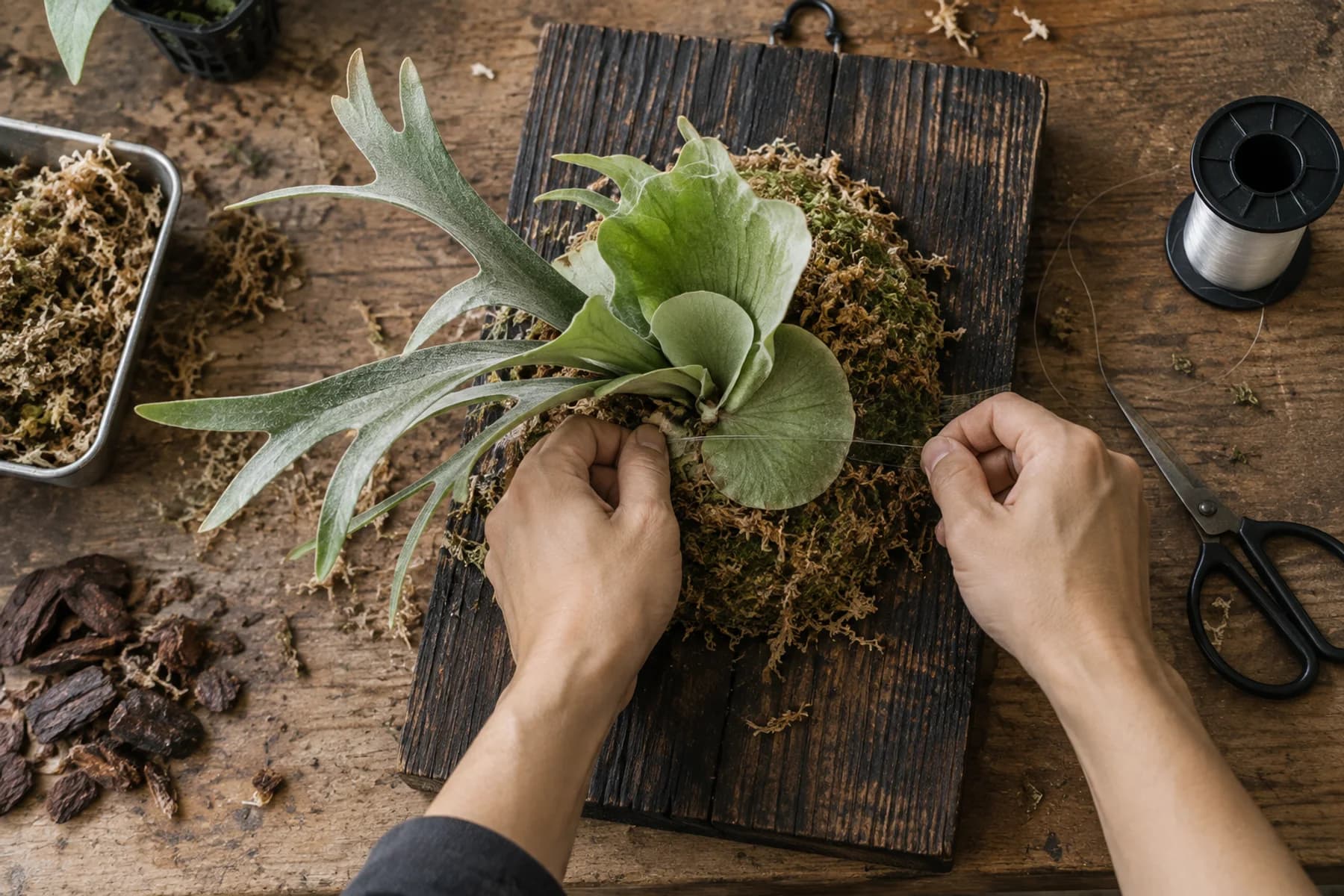
How to Mount a Staghorn Fern: Medium, Board, Tying, and the First Two Weeks
Mounting is the one decision that shapes a Platycerium for the next decade. Here is how a grower thinks about medium, board, tying and the two weeks after, before the plant settles in.