Species Guide
Platycerium, species by species.
Each species with its Latin, Chinese and Japanese names. Care notes, mother-plant photos, what is currently for sale.
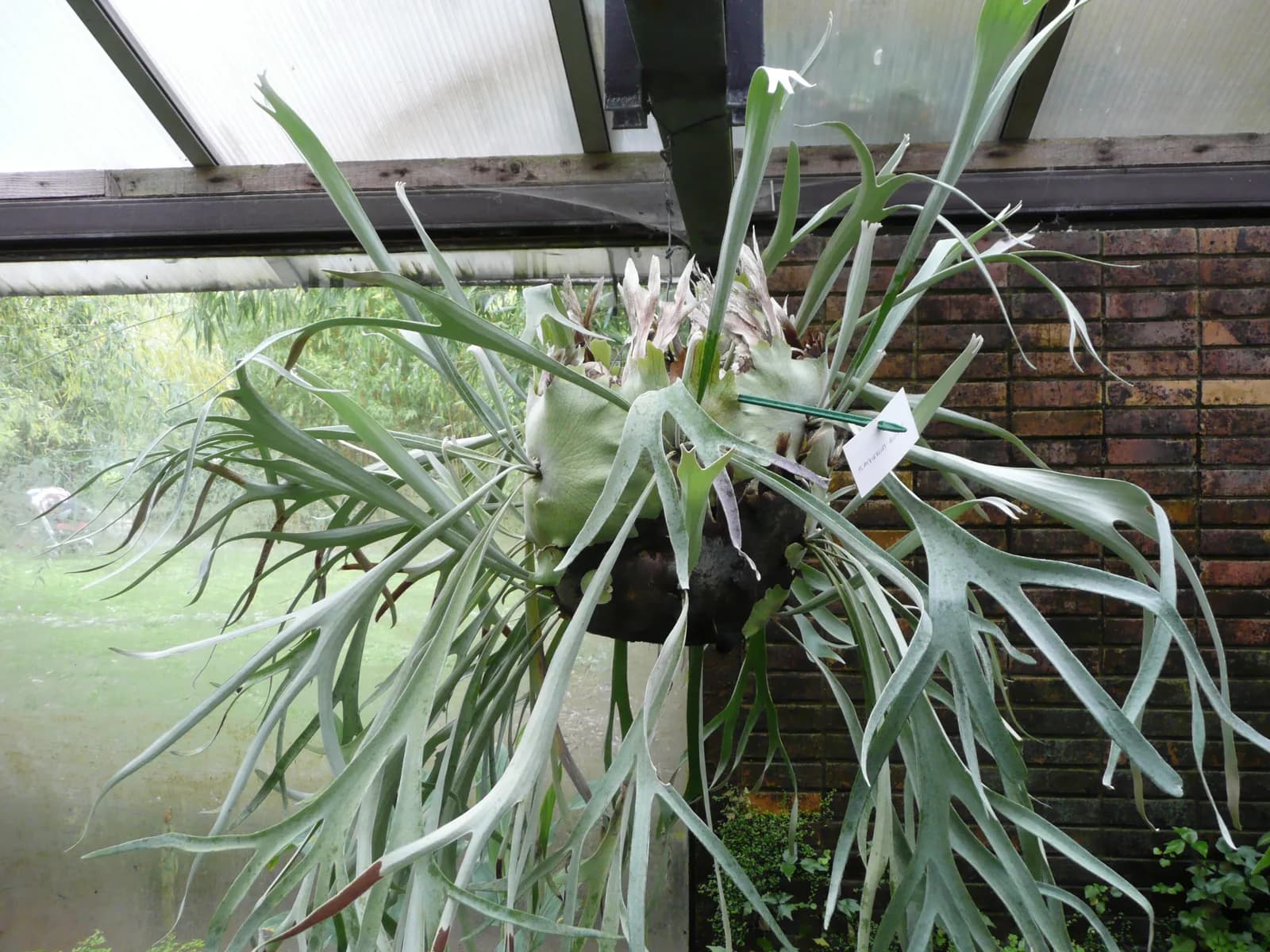
Platycerium alcicorne
round shield staghorn fern
Platycerium alcicorne, the round shield staghorn fern, is the type species of the genus and comes from East Africa and Madagascar. Its shields are round, smooth and hug the board; its narrow, wedge-shaped fertile fronds fork repeatedly. A prolific pupper that tolerates sun, dry air and moderate humidity, it is one of the easiest species. Two forms exist, mainland African and Madagascan.
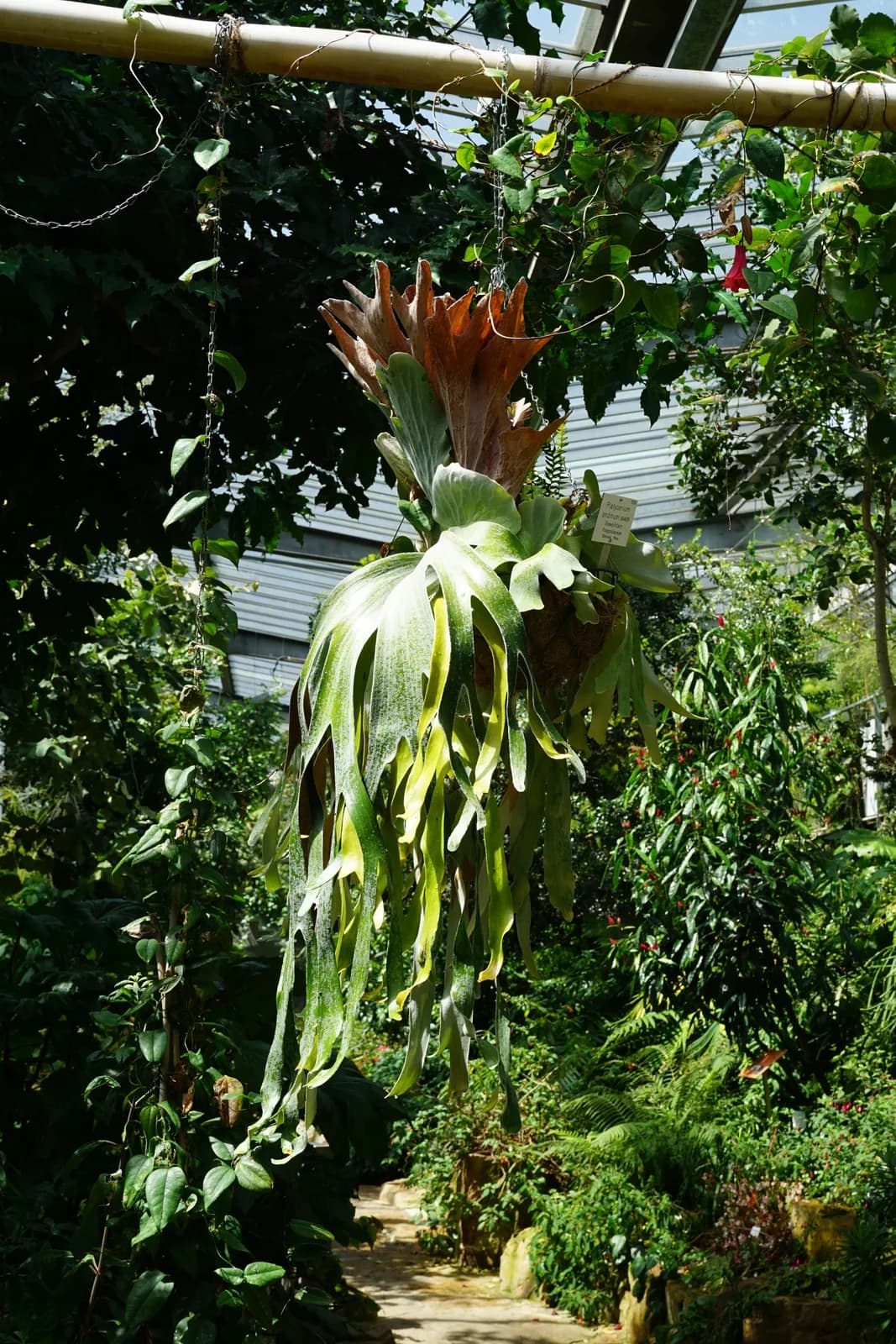
Platycerium andinum
Andean staghorn fern
Platycerium andinum is the only staghorn fern native to the Americas, from seasonally dry montane forest on the eastern Andes of Peru and Bolivia. Dense silver stellate hairs cover the whole plant, and the narrow pendent fertile fronds can exceed a metre. It is unforgiving of stagnant damp, dislikes both heat and cold, and is widely rated among the hardest species to keep.
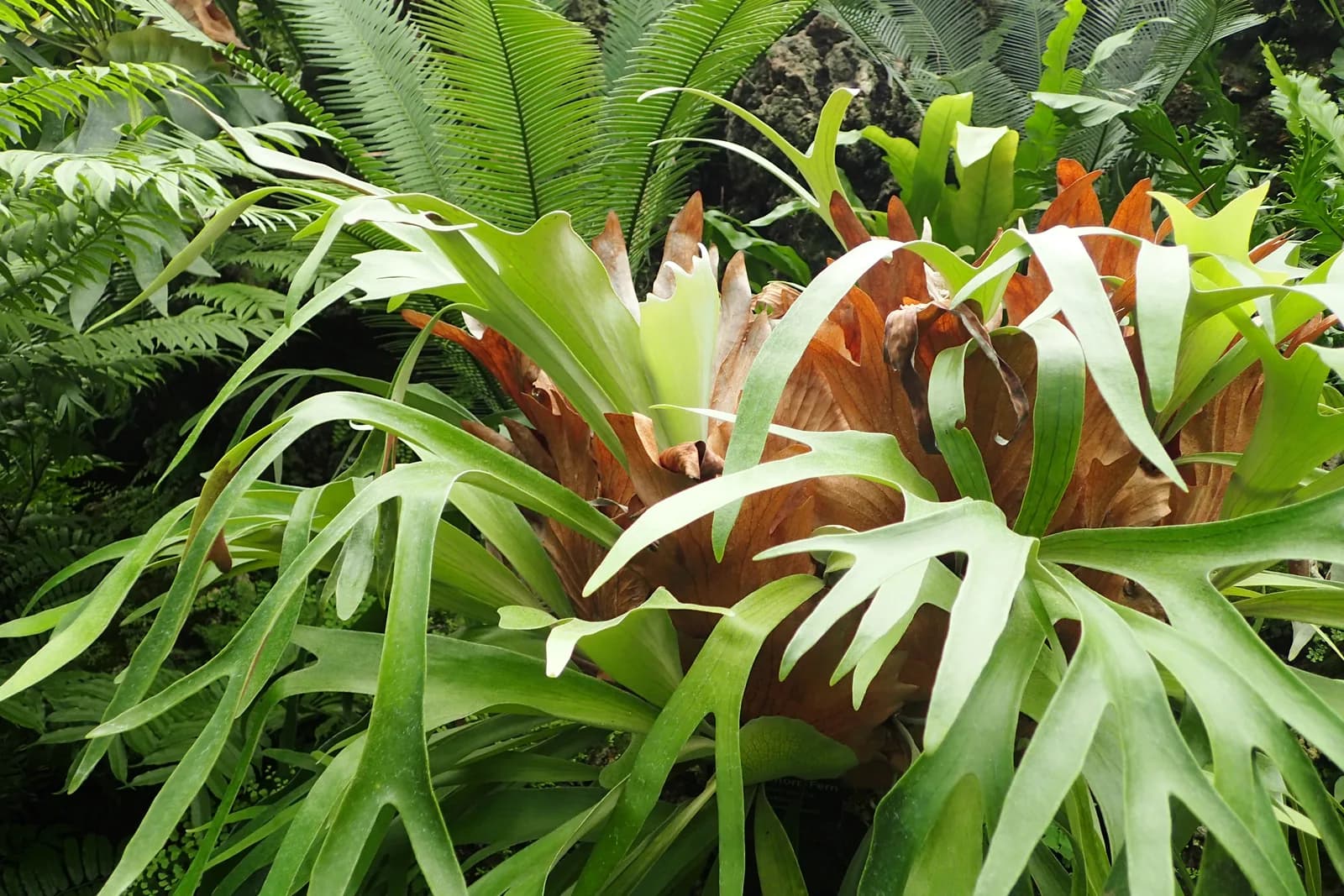
Platycerium bifurcatum
common staghorn fern
Platycerium bifurcatum, the common staghorn fern, is an eastern Australian epiphyte and the most forgiving species in the genus. Rounded shield fronds, repeatedly forked fertile fronds and a steady supply of pups let it build large clumps over the years. Trade forms such as 'Netherlands' and 'Mt. Lewis' descend from it. A beginner's plant worth growing well.
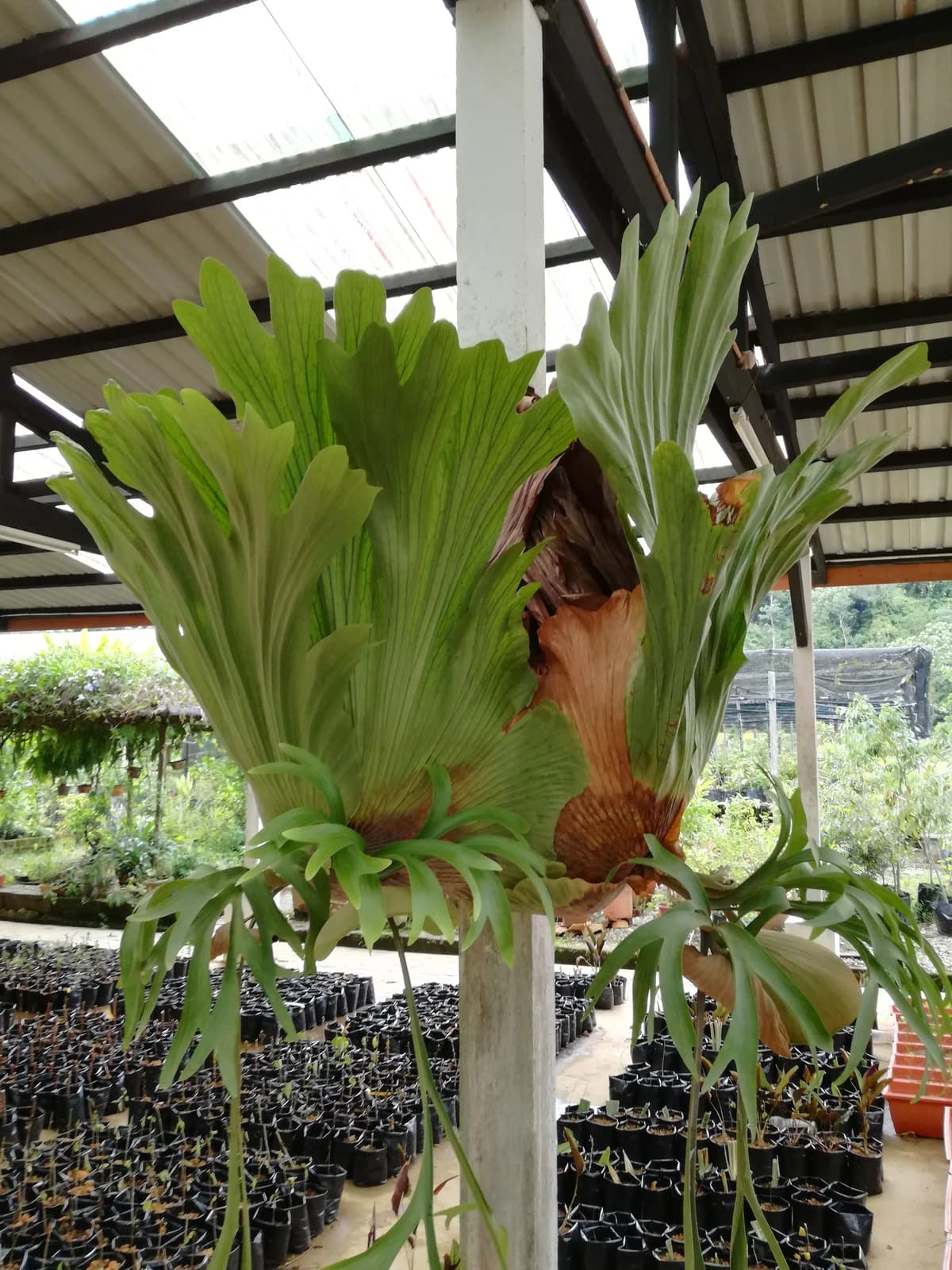
Platycerium coronarium
crown staghorn fern
Platycerium coronarium, the crown staghorn fern, is a lowland epiphyte of Thailand, Malaysia, Singapore, Indonesia and the Philippines. Tall upright shield fronds split into a crown, and its pendulous fertile fronds can hang well over two metres, with spores on a separate kidney-shaped lobe. It pups, tolerates more than ridleyi, and rewards growers with vertical space.
Platycerium elephantotis
elephant ear staghorn fern
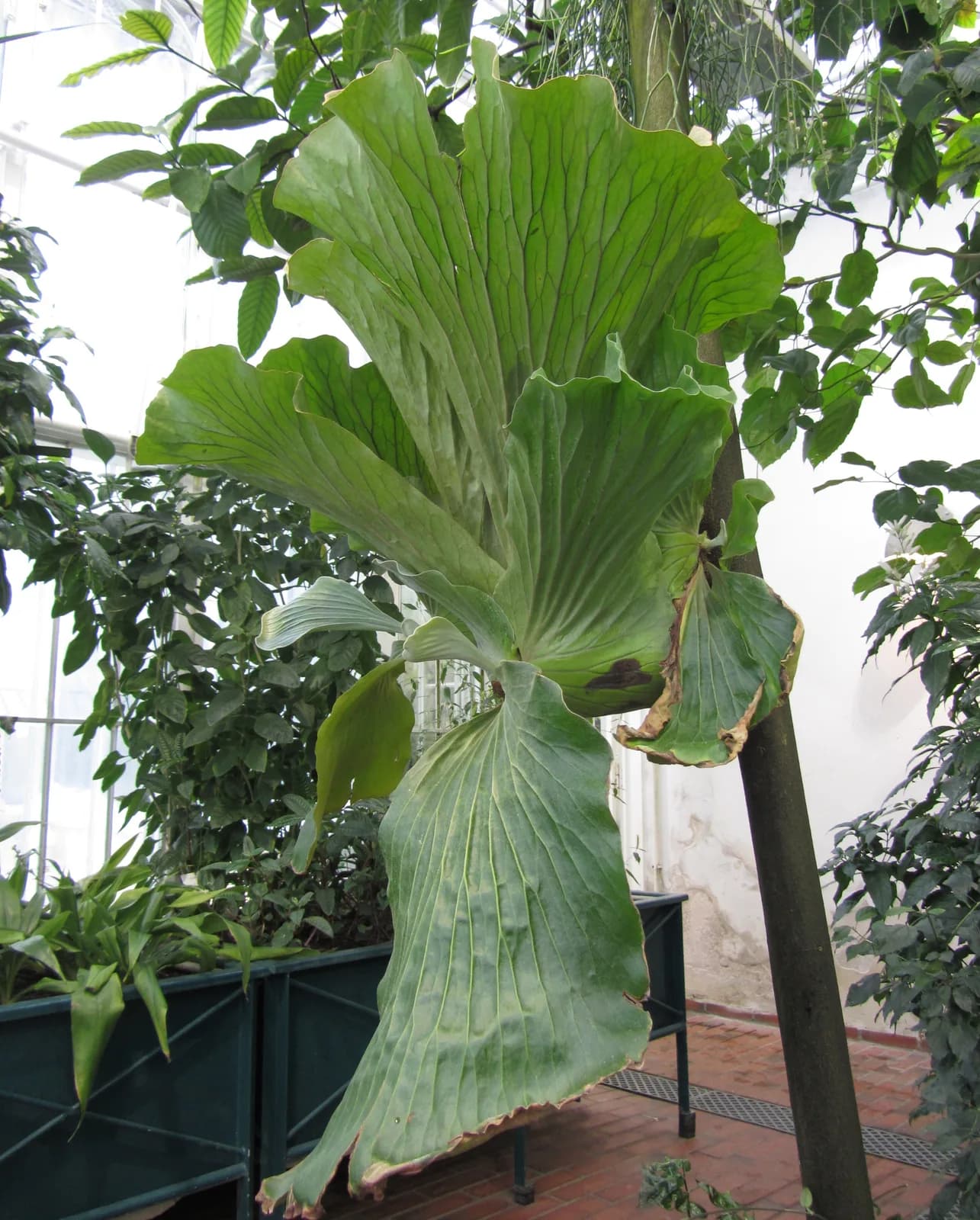
Platycerium elephantotis, the elephant ear staghorn fern, comes from seasonally dry tropical Africa around the Congo basin, Angola and East Africa. It is the only species in the genus with broad, unforked fertile fronds, ribbed like an elephant's ear. It follows a wet-dry rhythm, dropping fronds in a cool dry rest and regrowing in spring, and it pups freely.
Platycerium ellisii
Ellis's staghorn fern
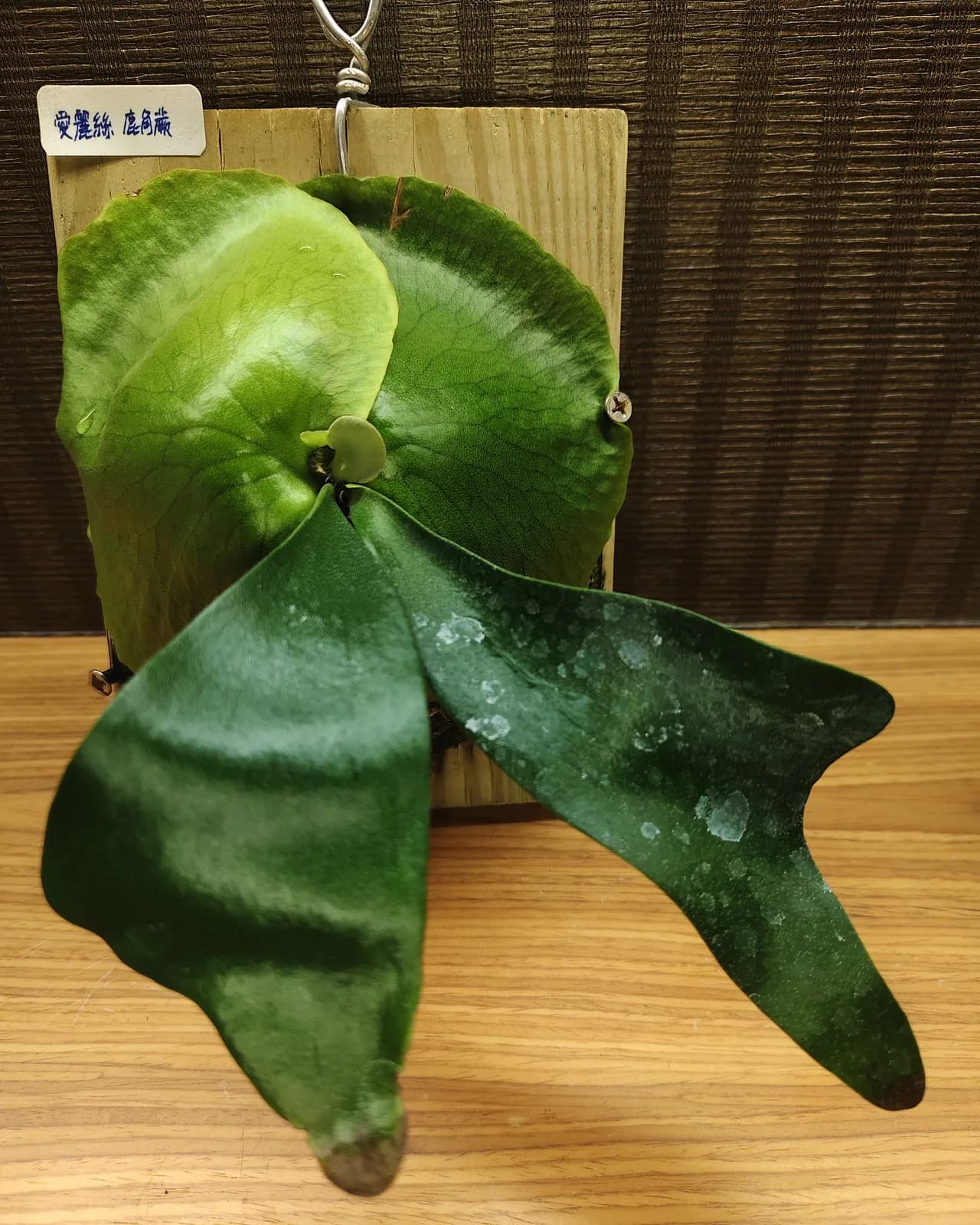
Platycerium ellisii is a compact staghorn fern from the humid lowland forests of eastern Madagascar. Its rounded, glossy shield fronds leave a gap between old and new layers, and the upright, wedge-shaped fertile fronds split only once at the tip. That single fork separates it from P. alcicorne. It pups, and most plants in trade are tissue-cultured.
Platycerium grande
giant staghorn fern
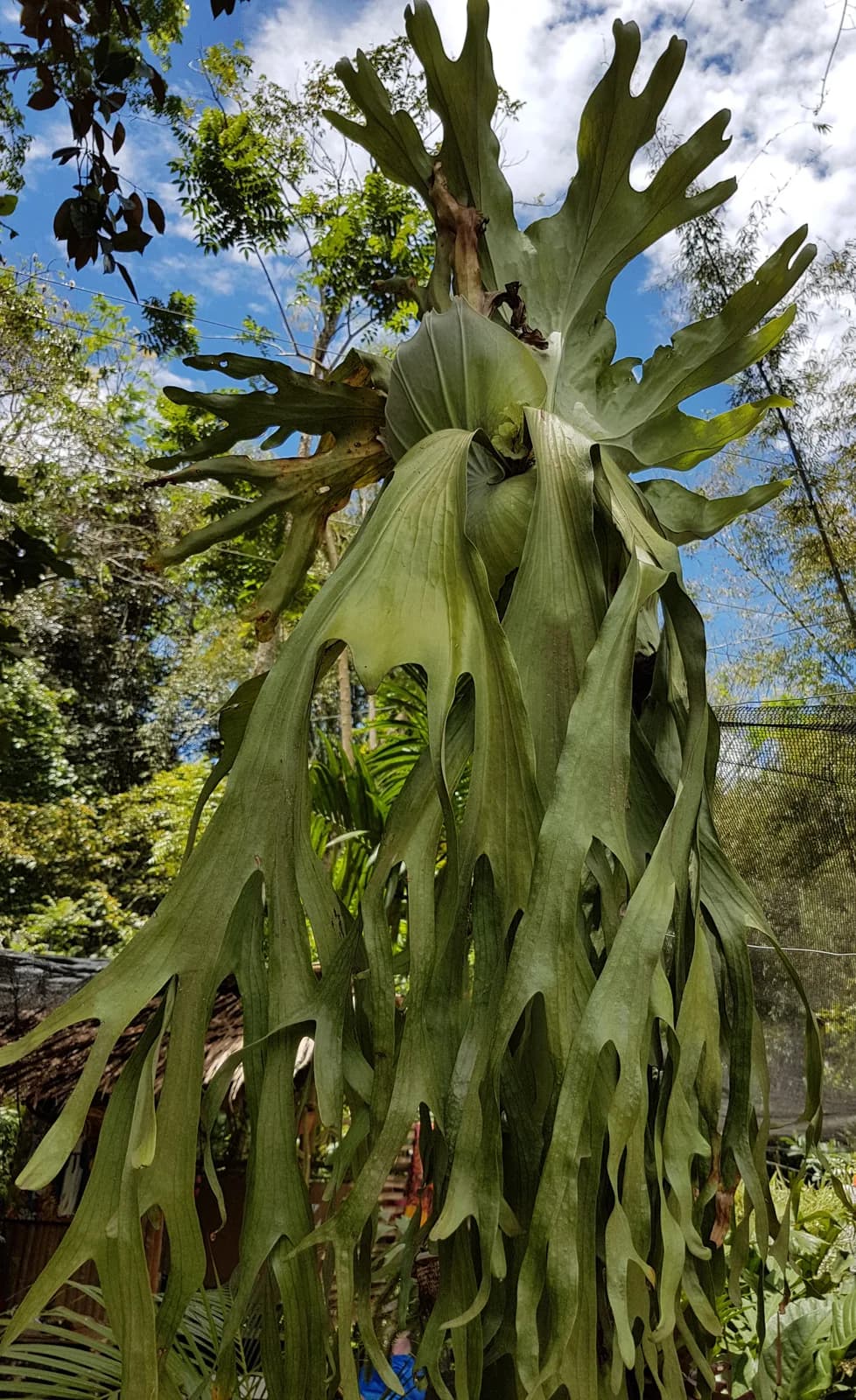
Platycerium grande, the giant staghorn fern, is a Mindanao endemic from the Philippines with tall, deeply and symmetrically lobed shield fronds and pendent fertile fronds up to two metres long. Each fertile frond bears two spore patches at the second fork, the one reliable difference from P. superbum. It never pups and is grown only from spores.
Platycerium hillii
green staghorn fern
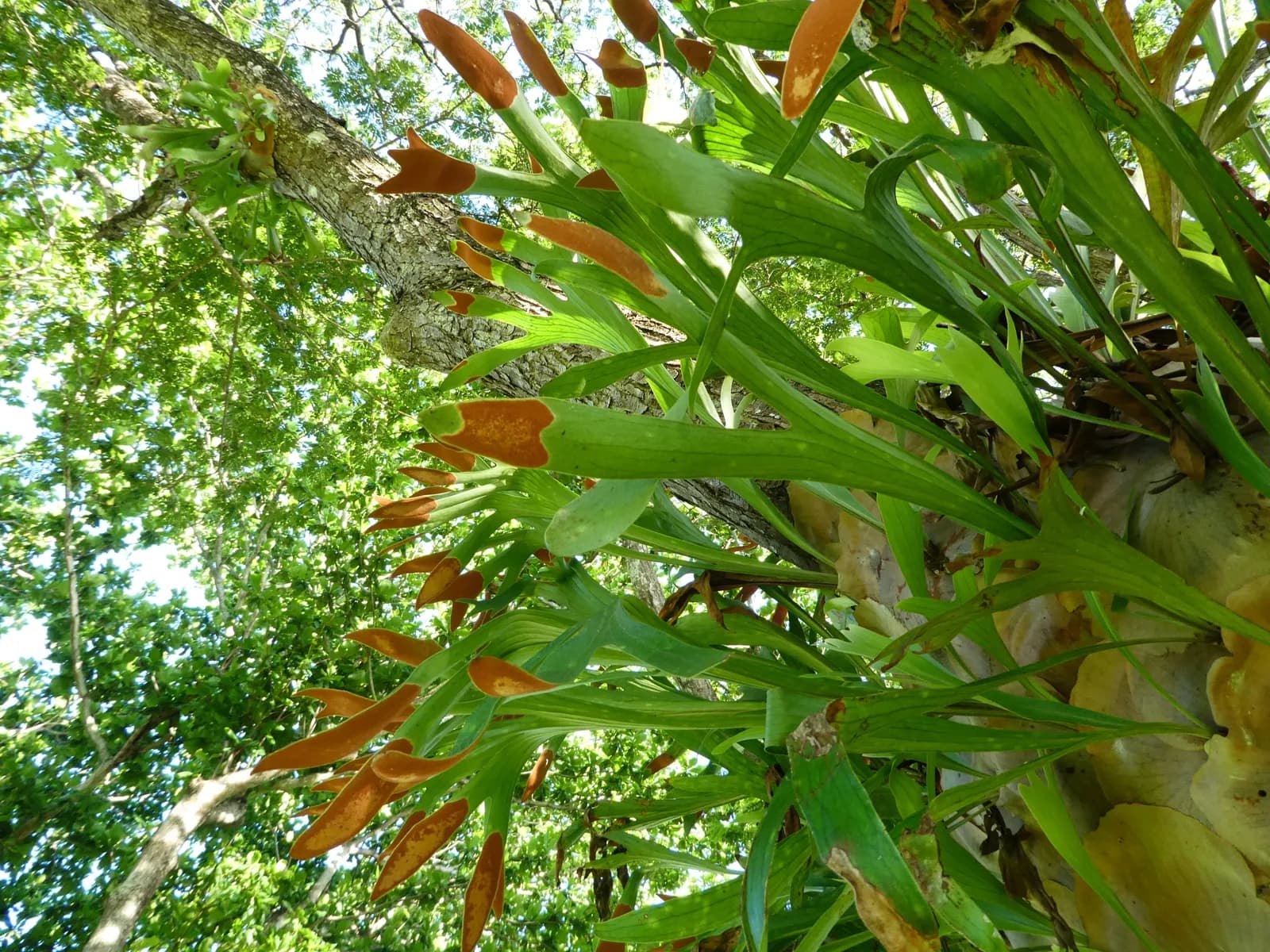
Platycerium hillii, the green staghorn fern, is a compact, clumping species from the wet tropics of northeastern Queensland. Its rounded, entire-edged shield fronds and wedge-shaped, dark green, nearly hairless fertile fronds that stand upright and fork only near the tips separate it from P. bifurcatum. It pups freely, and selections such as 'Rimklong' and 'Dragon' are collector favourites.
Platycerium holttumii
Holttum's staghorn fern
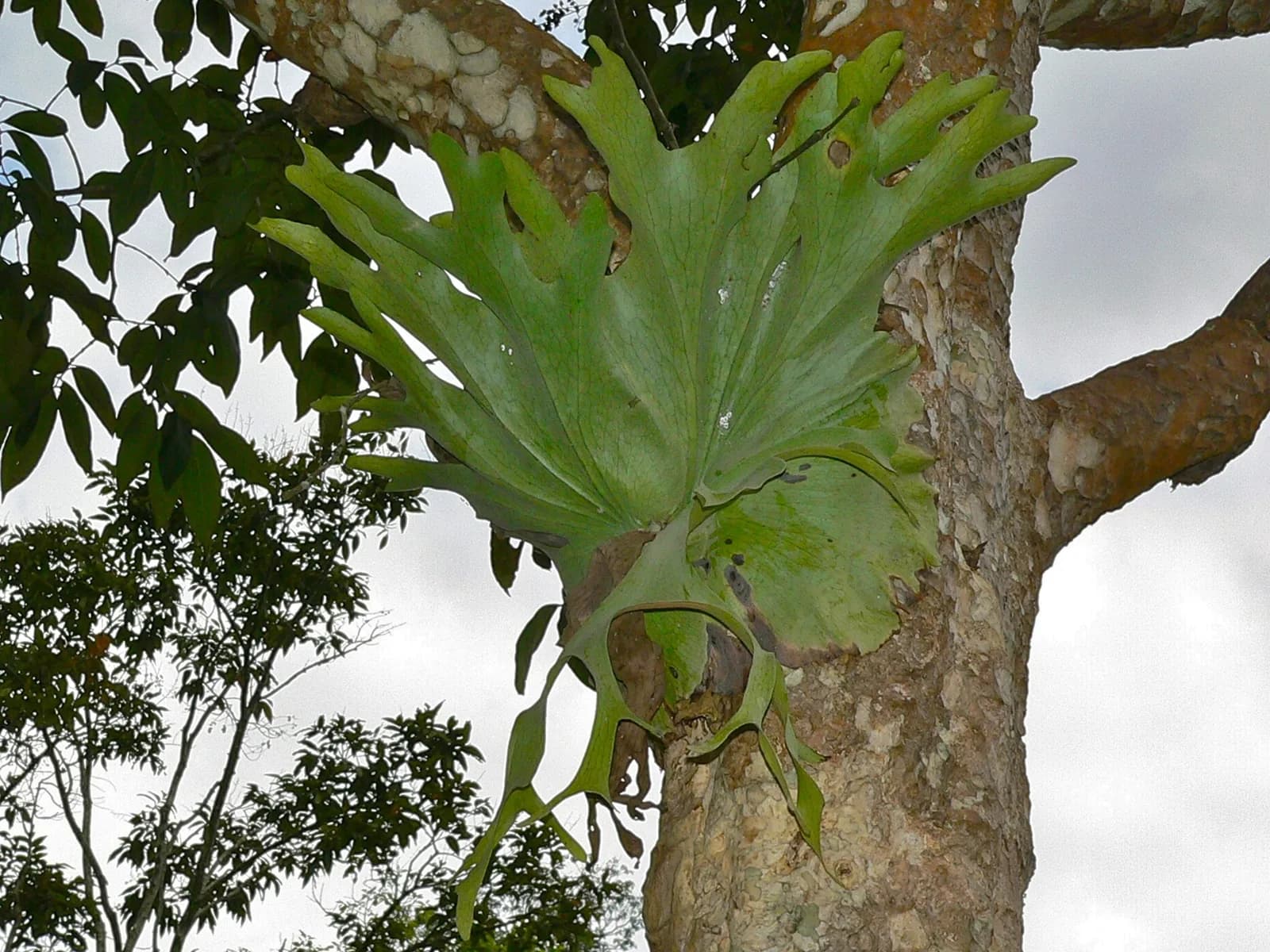
Platycerium holttumii, Holttum's staghorn fern, is a large single-crown species from lowland monsoon forest in Thailand, Laos, Cambodia, Vietnam and northern Peninsular Malaysia. Its tall shield fronds are deeply cut at the top, and its thick fertile fronds project forward with one short erect lobe and one long hanging lobe. It never pups and is the species most often mislabelled as P. wandae.
Platycerium madagascariense
Madagascar staghorn fern
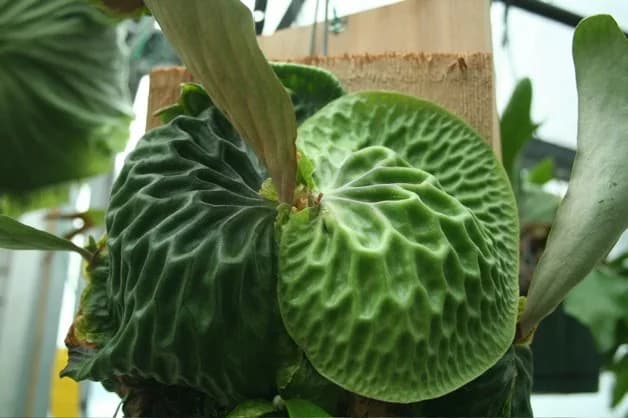
Platycerium madagascariense, the Madagascar or waffle staghorn fern, is the smallest species in the genus, from humid forest in eastern Madagascar. Its rounded shield fronds carry a raised honeycomb of veins, vivid green when active; the short fertile fronds spread outward. It pups readily but demands constant humidity, moving air and mild temperatures, which makes it a collector's challenge.
Platycerium quadridichotomum
four-forked staghorn fern
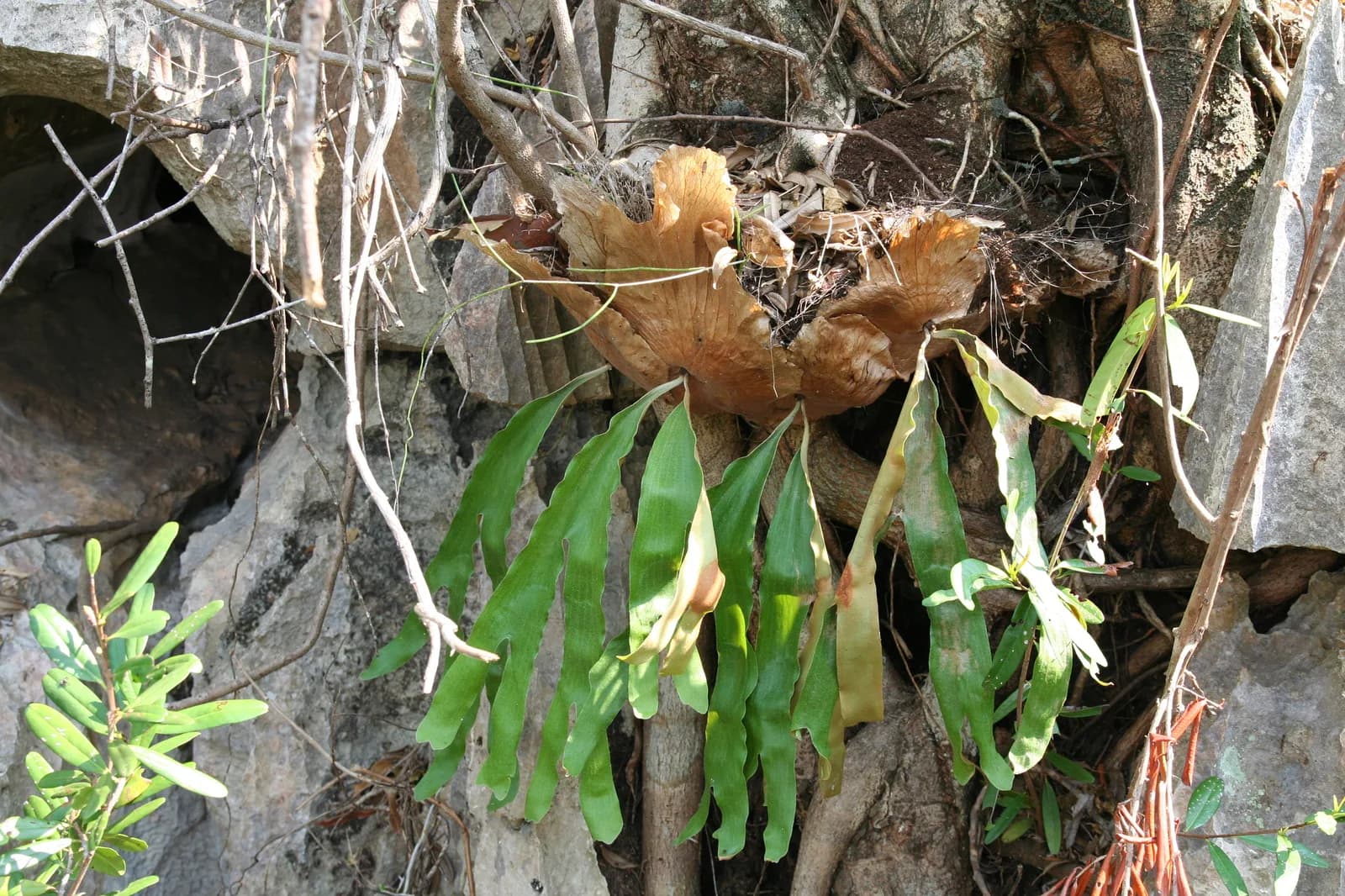
Platycerium quadridichotomum is a staghorn fern from the dry deciduous forests of western and northern Madagascar. Its pendent, wavy-edged fertile fronds fork twice into four tips, hence the name. In the dry season the shields brown and the fertile fronds roll into tubes; growth resumes with the rains. It is widely rated among the hardest species to keep.
Platycerium ridleyi
Ridley's staghorn fern
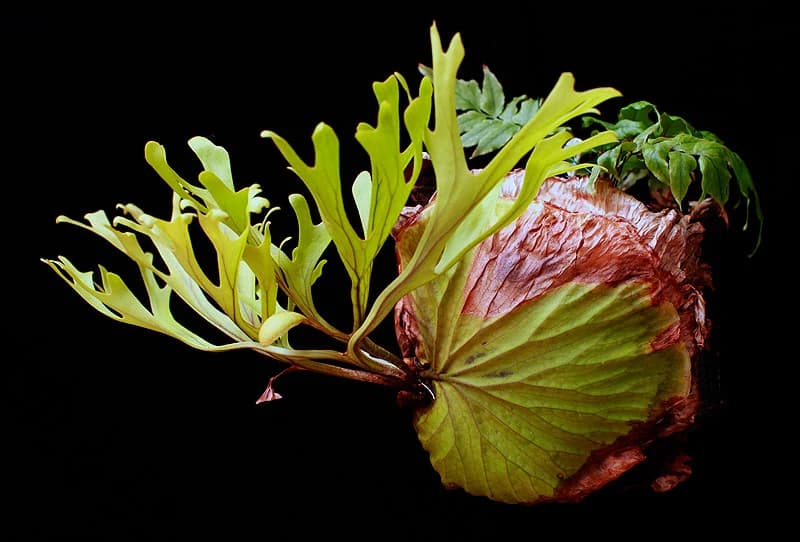
Platycerium ridleyi, Ridley's staghorn fern, is a canopy epiphyte from Peninsular Malaysia, Sumatra and Borneo. Its ribbed shield fronds close into a ball, and its upright, forked fertile fronds carry spores on separate spoon-shaped lobes. It never produces pups, needs bright light with moving air, and is the most sought-after species among collectors.
Platycerium stemaria
triangle staghorn fern
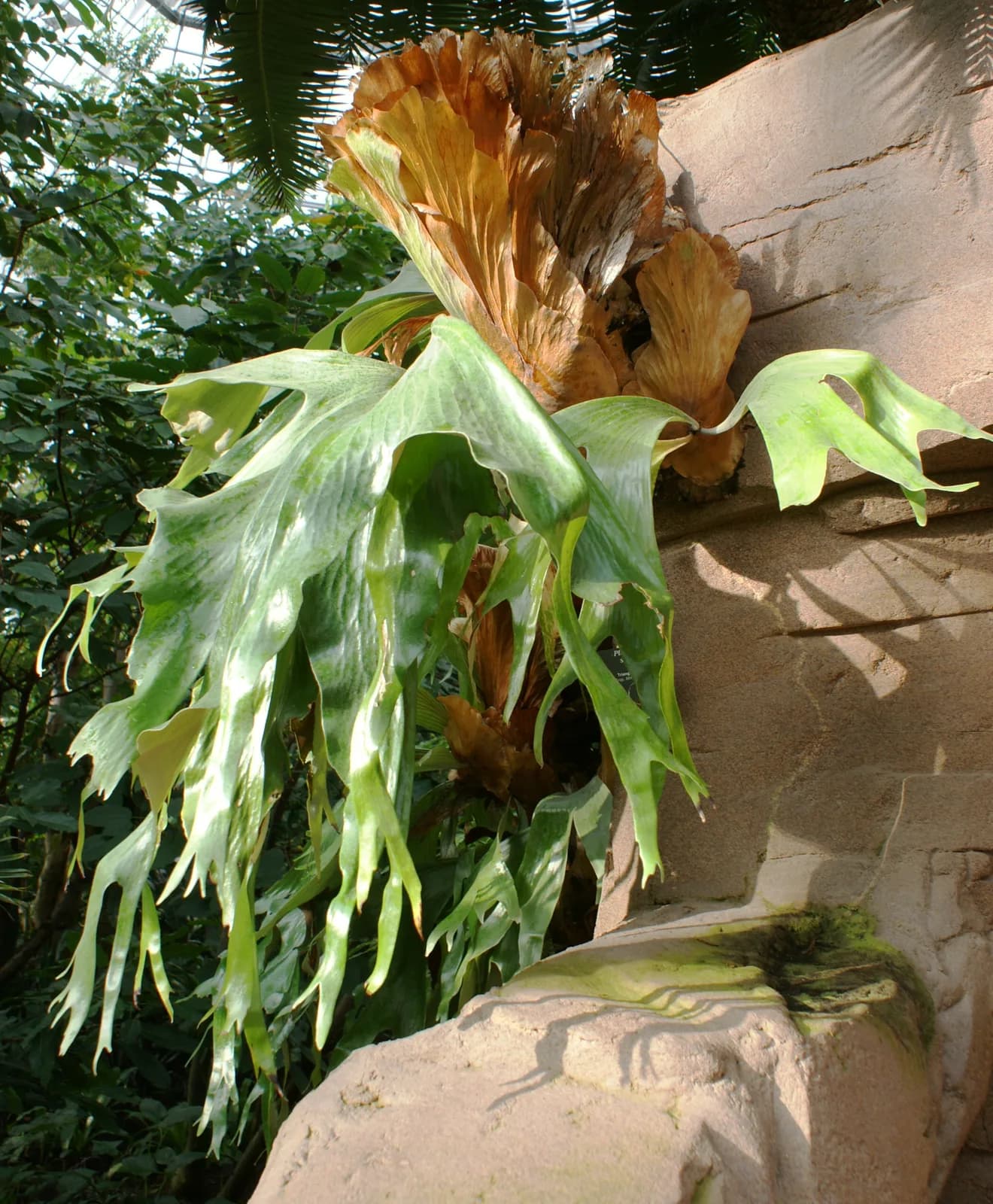
Platycerium stemaria, the triangle staghorn fern, is a West and Central African epiphyte with tall shield fronds whose wavy tops flare outward, and short, broad fertile fronds that are glossy above and thickly felted white beneath. It pups freely, likes water and heat, and is one of the easier African species in a warm climate.
Platycerium superbum
moosehorn fern
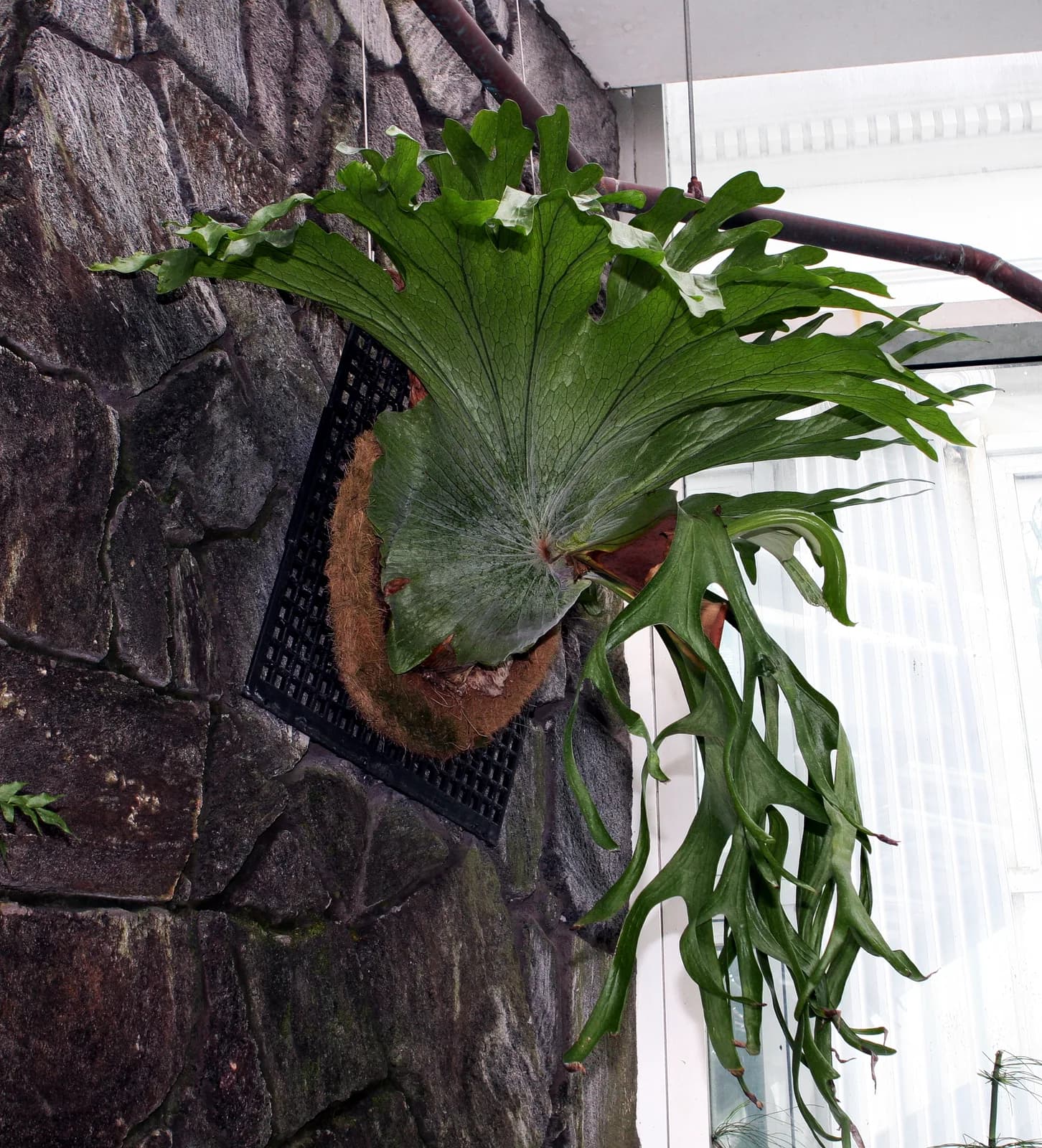
Platycerium superbum, the moosehorn or giant staghorn fern, is an eastern Australian epiphyte whose crown-lobed shield fronds can reach a metre across. Each pendent fertile frond carries a single spore patch in its first fork, which is the one reliable way to separate it from P. grande. It never pups and is grown only from spores.
Platycerium veitchii
silver staghorn fern
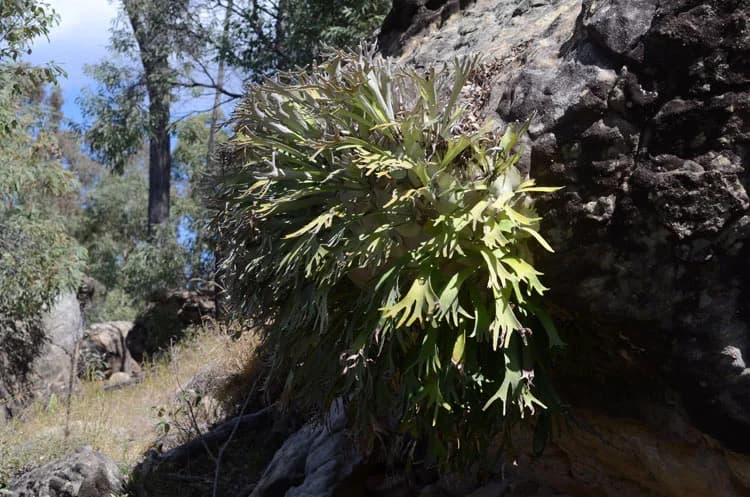
Platycerium veitchii, the silver staghorn fern, comes from dry open woodland in Queensland, Australia, where it grows on rocks as often as on trees. Its narrow fertile fronds stand upright under dense white stellate hairs. It is the most sun-, drought- and cold-tolerant species in the genus, pups freely, and is the source of 'Lemoinei' and the Auburn River form.
Platycerium wallichii
butterfly staghorn fern
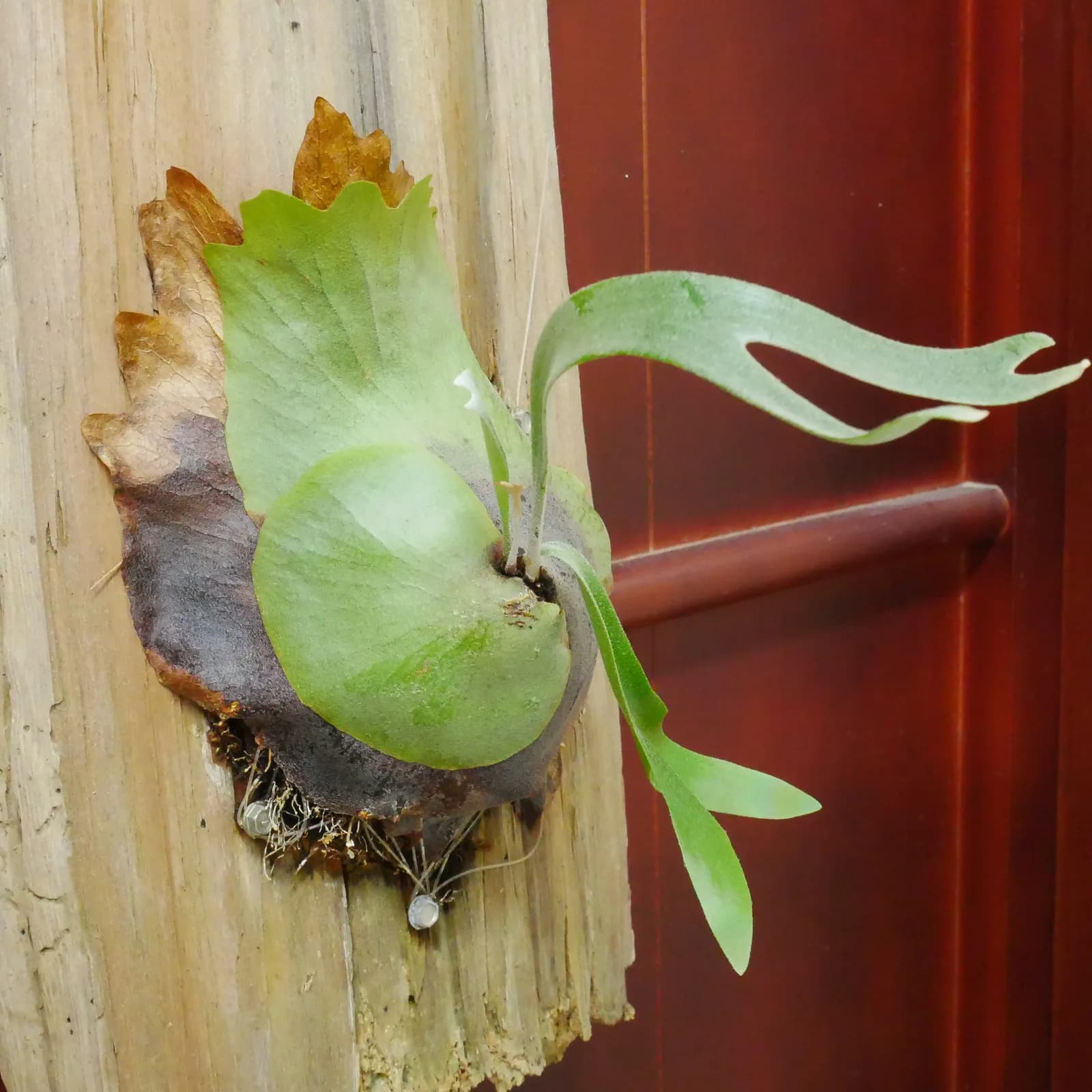
Platycerium wallichii, the butterfly staghorn fern, comes from the monsoon forests of north-east India, Indochina and southern Yunnan. Its broad, fan-shaped fertile fronds split into three uneven lobes like open wings, above tall crown-lobed shields. A single-bud, spore-grown species with a true dry-season rest: shields brown out, fertile fronds curl, and watering has to drop with them.
Platycerium wandae
queen staghorn fern
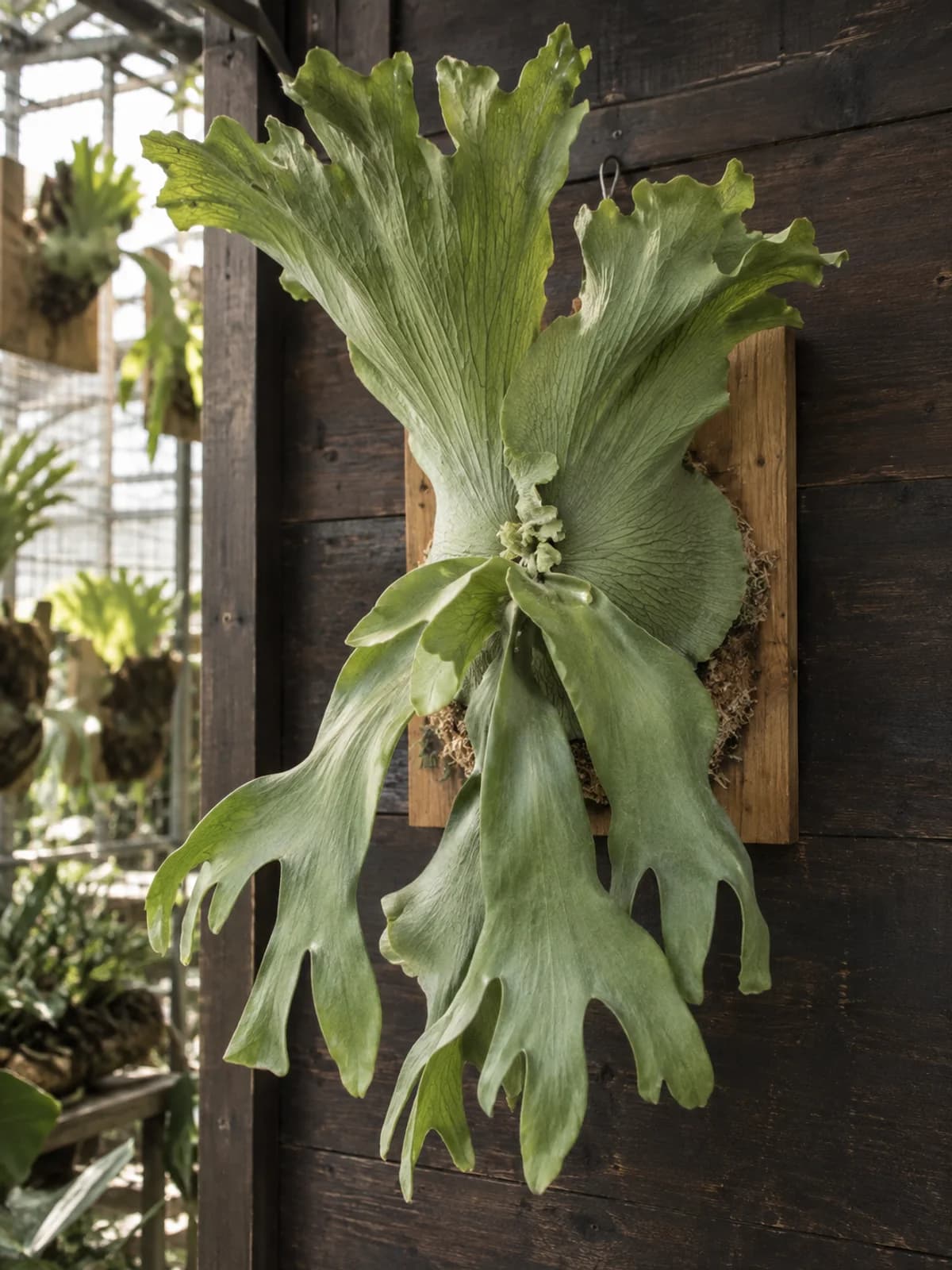
Platycerium wandae, the queen staghorn fern, is the largest species in the genus, native to lowland rainforest in New Guinea. Its shield fronds can span two metres with deeply cut tops and a distinctive frill of lacerated tissue around the bud; the broad fertile fronds hang beneath. It never pups, so every plant is spore-grown, and mature specimens are collection centrepieces.
Platycerium willinckii
Java staghorn fern
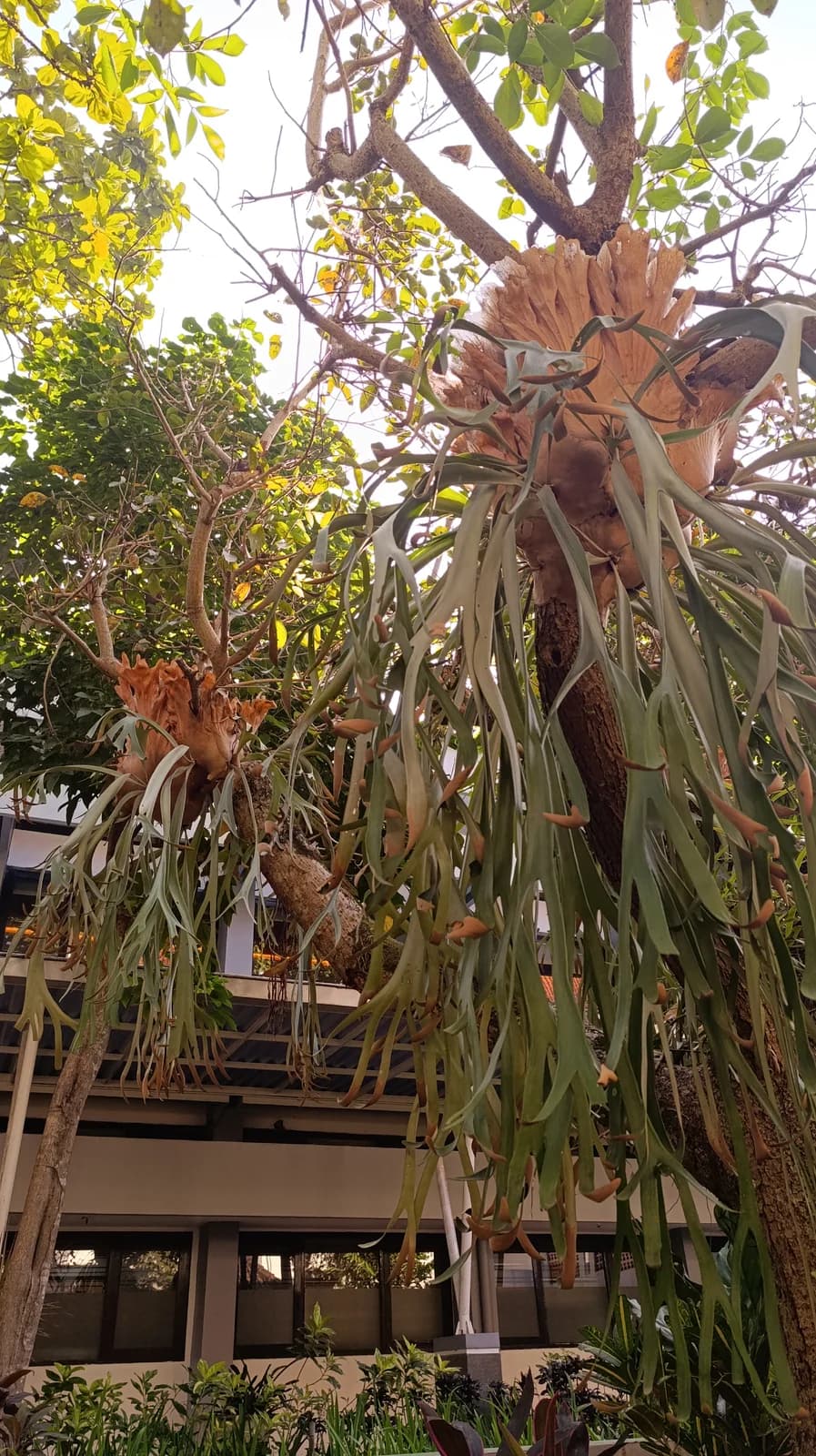
Platycerium willinckii, the Java staghorn fern, is an epiphyte of seasonally dry forest on Java and nearby Indonesian islands. Long, narrow, repeatedly forked fertile fronds hang under a coat of silver stellate hairs; the tall shields are lobed at the top. It is sun-tolerant, pups freely, and is the parent of most named cultivars collectors chase.